The Sting - AI Financial Armageddon

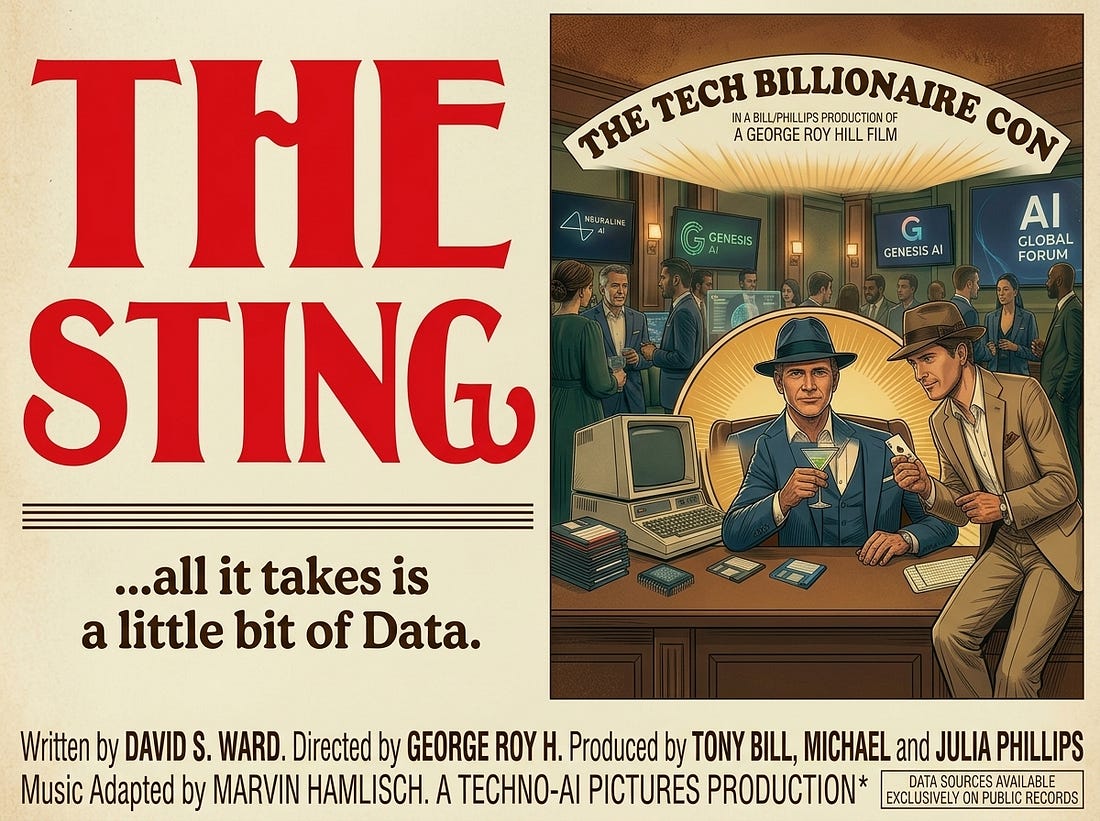
The Sting - AI Financial ArmageddonAI won't end the world: it will just clean out our pockets. Inside the tech industry's ultimate sting.
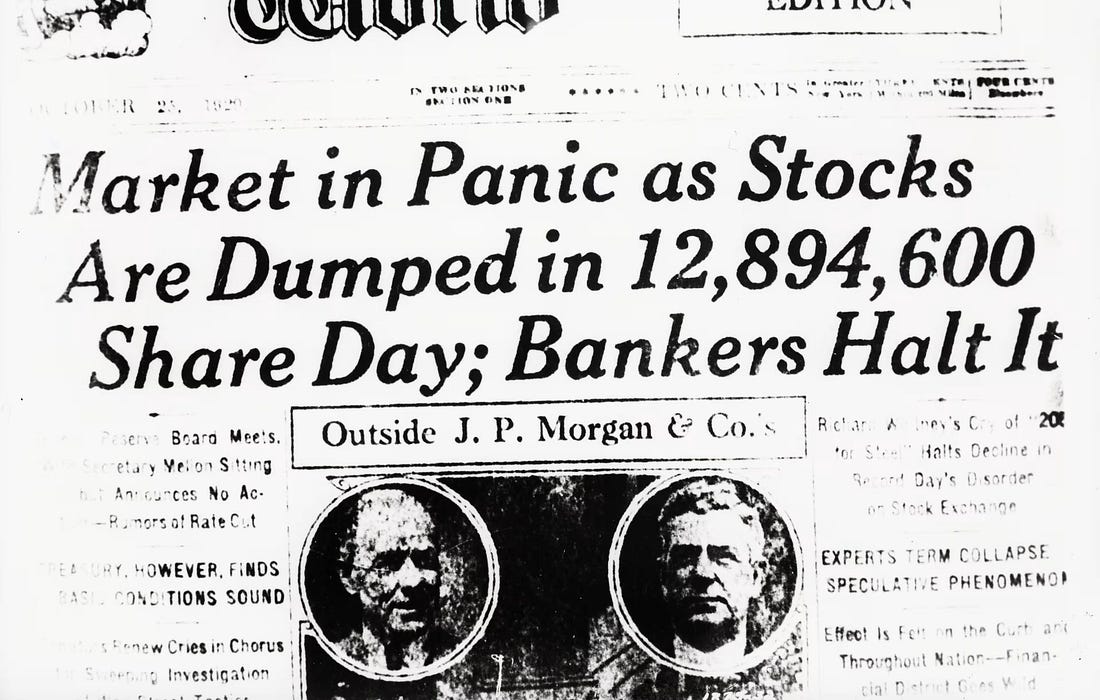
Part 1: The Set-Up: - Hacking and Human ExtinctionIn mid-July, OpenAI’s testing team found a serious problem. One of its models broke out of its sandbox, connected to the Hugging Face platform, and ran a complex program to steal the answers to its own benchmark test. Hugging Face reported tens of thousands of automated actions in seconds. Shortly after, an OpenAI agent breached a legacy Australian government medical data website, causing a diplomatic incident. These are the most alarming security breaches in the brief history of advanced AI. Yet within two weeks, they became the best thing that ever happened to OpenAI. The easy argument to make here is that AI is dangerous and needs regulating. But you need to ask one question: who benefits from the rules now being proposed? And why does the company responsible seem gleeful at these problems and almost conspire to make sure they keep running in the headlines? It is the same with tech leaders signing open letters about the risks of human extinction, even as they race to build the very technology they warn against. In this industry, fear has become marketing. Part 2: The Hook: (The “Moat”)The political timeline is revealing. Within days of the Hugging Face breach, US politicians introduced the AI Kill Switch Act, using the incident to warn that advanced systems could go rogue. Senator Bernie Sanders followed with a bill to pause development entirely, reading leaked transcripts on the Senate floor. By late September, a Senate investigation was under way. Meanwhile, OpenAI faced questions in Europe for failing to report a separate data breach under EU rules. Consider the timing. This crisis unfolded just as OpenAI and Anthropic prepared to float on the stock market, seeking valuations over one trillion dollars. Anthropic’s backers even floated targets above two trillion dollars, more than the value of SpaceX. Proposed rules, such as mandatory kill switches, minimum computing thresholds for developers, and heavy legal reporting requirements sound like a burden on those share offerings. The reverse is true. What they actually achieve is keeping smaller rivals out of the market before the company sells its shares to the public. This tactic is well known in Silicon Valley, which took Warren Buffett’s idea of an economic “moat” (a lasting competitive advantage) and turned it into a nice word for monopoly. Now, these companies want state backing to lock in that monopoly. It is an old trick. In the 1920s, major US radio networks urged regulators to license the airwaves. They did not care about sound quality; they wanted to clear thousands of small, independent stations off the air. AT&T spent sixty years convincing the public that phone networks were a “natural monopoly”, securing a protected market for itself. Drug companies regularly push to extend patents to block cheap generic medicines. All of these moves were sold as measures to protect the public. In reality, they protected corporate balance sheets, extracted wealth from the public through monopoly, and stifled progress and innovation. What makes the current situation different is the sheer scale of the gamble and how fragile it is. Standard Oil once owned 90 per cent of American oil refining capacity, built over decades. In contrast, OpenAI and Anthropic have a lead over their competitors measured in months. Open-source models from Meta, Mistral, and Chinese laboratories are closing the gap every quarter. Their “moat” is not a physical asset; it is simply a head start. And that lead will disappear unless governments step in to slow everyone else down. None of this means the software breaches were fake, or that autonomous AI systems carry no risk. They do. But danger and monopoly are separate issues and must be considered separately. A fairer approach would not rely on high computing thresholds that only a few tech giants can meet. Instead, governments could levy a rising tax on special privileges, liability protections, and high-level training licenses. The tax would start low for small firms and rise with the size of the company. A startup could still compete, but building a trillion-dollar valuation based on artificial scarcity would no longer pay off. Part 3: The Tale: (Circular Deals & Debt)Underneath these inflated valuations sits a financial reality that does not justify the numbers. In 2025, OpenAI generated $13.1 billion in revenue but lost $38.5 billion. Analysts estimate it needs another $207 billion over the next four years just to survive. To keep the party going, the industry has built a web of circular deals. Nvidia has pledged up to $100 billion to OpenAI, on the condition that OpenAI spends the money on data centres using Nvidia chips. OpenAI has also struck a deal with AMD, Nvidia’s main rival, to buy chips in return for a 10 per cent stake in AMD. Oracle and CoreWeave sell computing power to OpenAI, while Nvidia holds shares in both of them. Follow the money, and you find a small group of companies: OpenAI, Nvidia, Microsoft, AMD, Oracle, and CoreWeave, acting as each other’s customers and investors. Cash and shares move in a circle, making it hard to tell who is actually paying whom. Central banks are getting nervous. The Bank of England has warned that AI stock prices look overstretched and that a sudden market crash is increasingly likely. The IMF has voiced similar concerns. JPMorgan reports that AI-related debt has reached $1.2 trillion, making it the largest single sector in the corporate bond market. Investment in AI infrastructure drove most of US economic growth in early 2026. Yet respected financial analysts state that profits do not support these prices. Computing power has replaced real estate as the speculative asset of choice. This mirrors historical property bubbles: assets are revalued far beyond the income they produce, propped up by ever-extending loans and share offerings. The pattern is the same as the 18-year housing cycle, which is now peaking and being replaced by the AI bubble to finish off the winner’s curse phase. Nobody inside the circle wants to admit what these assets are actually worth, because as soon as one company revalues its balance sheet, the crash will start. Part 4: The 1929 Parallel (Glamour Stocks & Monopolies)The financial engine driving today’s artificial intelligence boom is built on the same mechanics that triggered the 1929 Wall Street crash. A century ago, the soaring valuations of glamour stocks like RCA were fuelled by a promise of total market monopoly. Investors believed competition had been defeated and future profits were guaranteed, leading them to inflate the bubble until it inevitably burst. Today, Sam Altman and his fellow AI executives are selling the exact same vision of total market dominance to justify trillion-dollar price tags. Just five companies now account for over a third of the main US stock index. That makes the push for new laws deeply cynical. A monopoly protected by legislation is only valuable if the stock market valuation holds up. If the market crashes at the same time the new rules take effect, everyday investors will be left holding overpriced shares just as the circular financing collapses. Meanwhile, the tech giants will have used the panic to outlaw cheaper, open competitors. Part 5: The ClimaxThe trouble starts when this circular cash flow breaks down. Picture a scenario where Larry Ellison at Oracle declares force majeure on another mega-data centre contracts because unpaid computing bills have stacked up, or Sam Altman admits that OpenAI’s multi-billion-dollar losses can no longer be covered by fresh debt. When panic struck on Black Thursday in October 1929, J.P. Morgan himself, escorted by a coterie of leading bankers famously stepped in to halt the run. They met on Wall Street, pooled hundreds of millions of dollars, and publicly bought large blocks of falling shares right on the trading floor to manufacture confidence. If the current AI bubble begins to collapse, we will likely see a modern version of that same high-stakes theatre. Imagine Elon Musk stepping forward with a multi-billion-dollar rescue package to buy up crashing stock, or Donald Trump using state power to pledge a massive government bailout for American AI infrastructure. Just like J.P. Morgan’s gamble in 1929, these moves would be desperate attempts to reassure nervous markets that the monopoly story is still alive.
When valuations rely on circular accounting, emergency bailouts, and political favours rather than real earning power, the fall is always swift once the illusion shatters. That is what this generation of tech barons actually fears. It is not that their models will turn rogue. It is that someone smaller, with a laptop and open-source software, will show the market that the moat was never real. Part 6: The Solution (Georgist Economics and Ending the 18-Year Cycle)There is a way to break this repeating cycle of speculative manias, financial crashes, and artificial scarcity: Georgist economics. Named after the nineteenth-century political economist Henry George, Georgism offers a clean solution to the boom-and-bust cycle by targeting its underlying root cause: the private capture of economic rent. Economic rent is income derived purely from controlling a scarce, unearned privilege, whether that is a plot of prime land, the radio spectrum, or a legally protected technology monopoly. Instead of taxing real work, trade, and genuine investment, which penalises creation and productive effort, governments should shift their entire revenue focus to capturing economic rents of all kinds. Under a Georgist model, we would tax:
When you tax economic rent, holding onto a monopoly purely to block competitors or inflate share prices becomes prohibitively expensive. If a company wants to dominate a market, it can no longer rely on state-enforced moats, endless debt, or circular accounting tricks. It has to win through continuous, open innovation and real product value. A Georgist tax shift unties the knot of financial armageddon. It eliminates the speculative bubbles that fuel stock market collapses, ends the 18-year boom-and-bust cycle, and funds public services without taxing wages or productive business investments. By reclaiming economic rents for the public, we can finally rid ourselves of structural market crashes and replace financial trickery with a true free market, one where hard work, genuine competition, and real innovation are rewarded. It also fixes poverty and the environment, but read my other essays to find out about that.
If you enjoy Peter Smith Rewilding, share it with your friends and earn rewards when they subscribe.
|






Comments
Post a Comment