Economists Deleted Land From the Economy. Here Is What Happened Next

Economists Deleted Land From the Economy. Here Is What Happened NextFred Harrison on the missing third factor of production, the 18-year cycle, and why the AI boom looks like a property bubble.
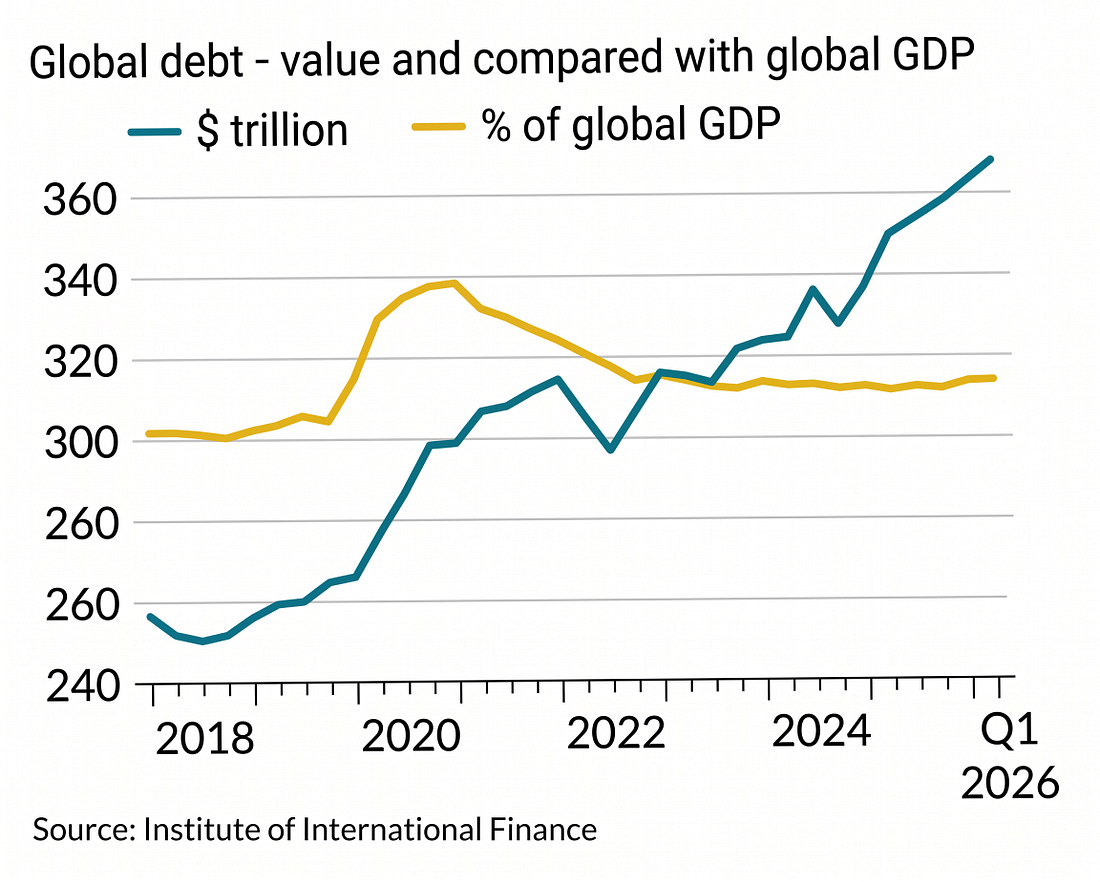
Fred Harrison explains the solution to the economic problems of the world? Simply and with clarity. So I asked Fred Harrison to try to explain the solution to the economic problems of the world, simply and with clarity. He said he would try: The system is bankruptFred starts with a blunt claim. In his view, the global economic and social system is bankrupt. Debts run at three times annual output, or more. That is what bankruptcy means. He doesn’t think it’s hopeless. But he says the economics profession is part of the problem. Economic theory, as it is taught and applied, stops people seeing what’s going on.
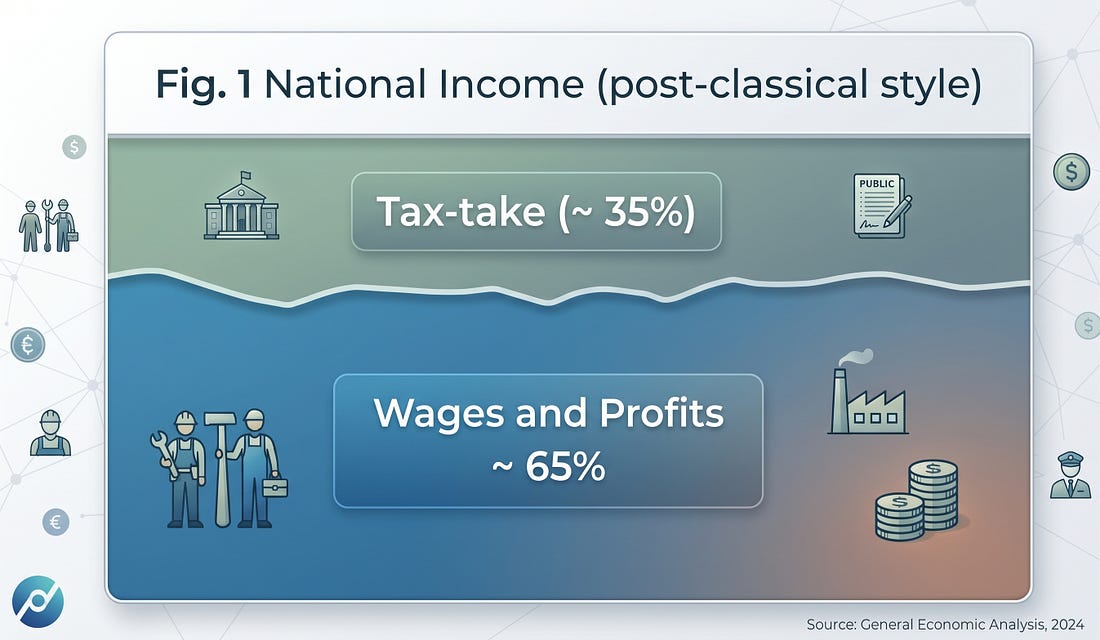
Two factors, not threeModern economists work with two factors of production: labour and capital. National statisticians track wages and profits. Government takes a slice of both.
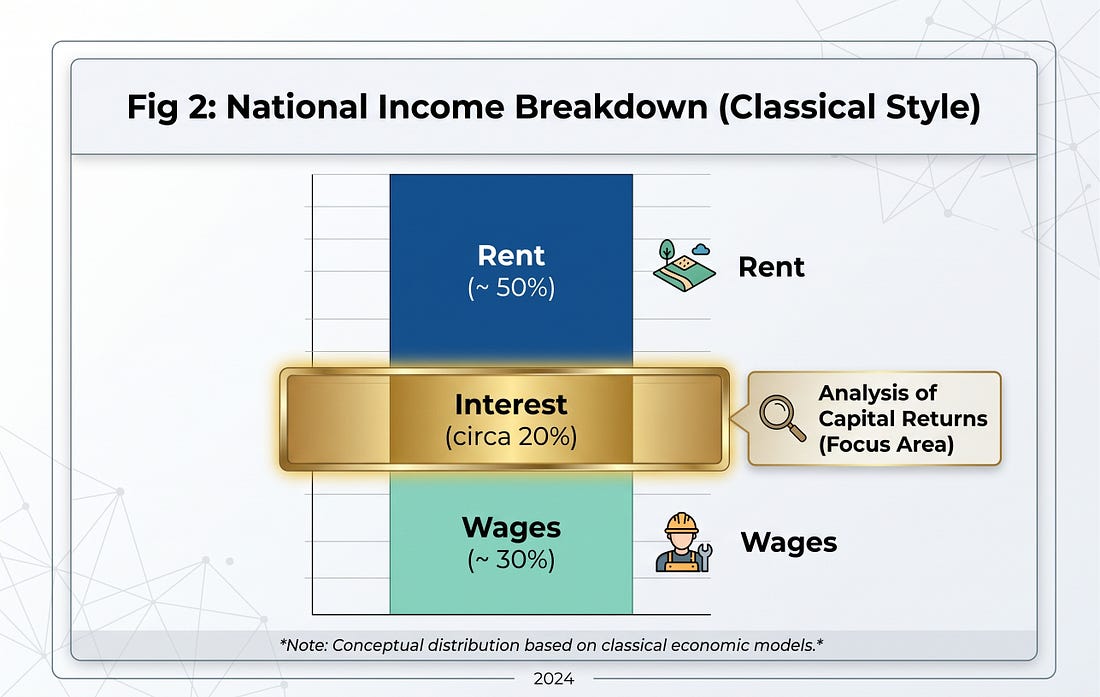
That is the whole model. The economy is wages plus profits, minus tax. Everything is a contest between workers and investors, with the state skimming off the top. The classical economists saw it differently. They named three factors: labour, capital and land. Land is the third factor. Its income is rent. Rent has vanished from the standard picture. Fred asks the obvious question. How can something that large be missing? Where the rent wentFred’s answer is that economists buried it. Over the last hundred years land was folded into capital as a sub-category. Rent stopped being a distinct income. It was lumped in with interest and profit. Fred uses the UK as his benchmark. Take the net income left after wages and the return on capital. That is rent, and he puts it at about half of national income.
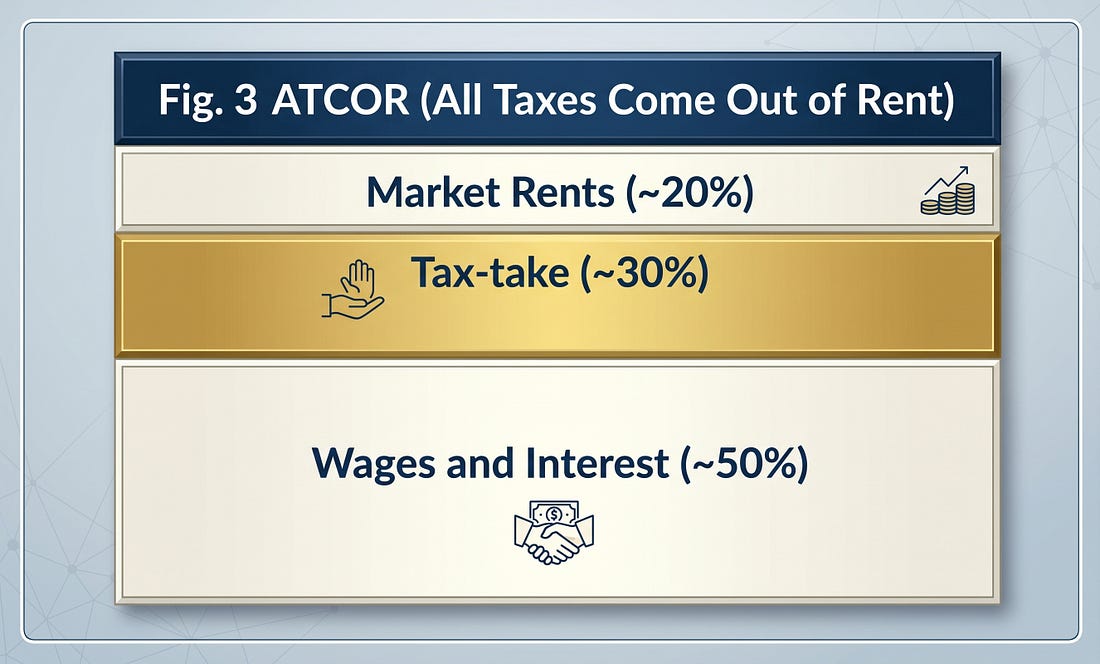
Look at the bars. Rent at roughly 50 per cent. Interest at around 20. Wages at about 30. Fred’s point is that rent has the largest share and the least attention. Land and capital behave differently. Capital is made. Land is not. Location value comes from people, culture, institutions and opportunity gathering in one place. Treat the two as the same thing, and you get the wrong diagnosis every time. The 50 per cent figure is Fred’s estimate, not an official statistic. That is part of the problem he describes. Official statistics don’t measure it, because the framework hides it. All taxes come out of rentThis is the claim first described by John Locke and described by Prof. Mason Gaffney and Fred; they called it ATCOR: all taxes come out of rent.
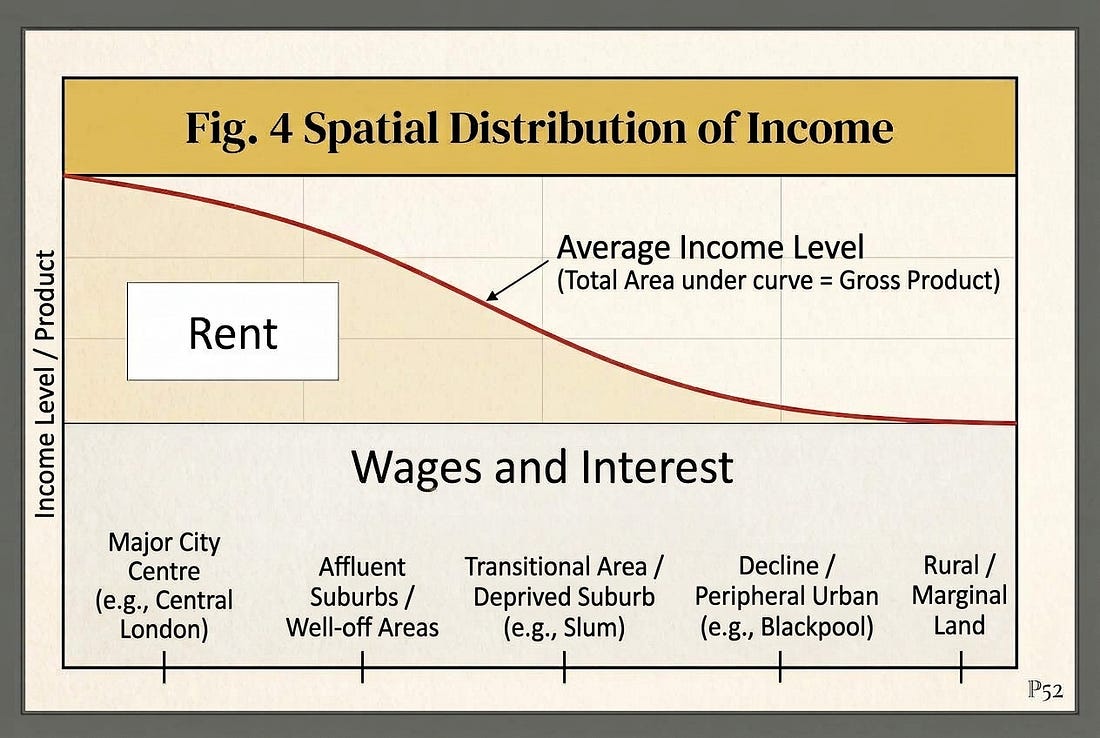
The logic runs like this. Government loads taxes onto wages and capital. People and firms respond. They pass the cost on, move, withdraw or bargain. Prices adjust. The burden travels until it lands on the one income that cannot flee: the net income from location and land and other monopolies. Take the tax-take at about 30 per cent of national income. It comes out of the 50 per cent that is rent. That leaves roughly 20 per cent in private hands as market rent. Economists call the mechanism elasticities. Fred doesn’t claim to settle it in a few minutes. He says the pulling power sits with the assets that generate rent, and the pricing system pushes the burden there in the end. More than twenty years ago, I sat at a London dinner with a table of economists. They were arguing that taxes destroy the economy. I told them that if taxes on wages go up, rents come down, and if taxes come down, rents go up. The tax comes out of the rent either way, and the economy is no better. The only real damage is the inefficiency of collecting it from labour. They were stunned. They had no answer. They had never met the idea, because nobody had taught it to them. Yet John Locke set it out in 1691. Taxes, he wrote, however contrived and out of whose hand soever taken, “for the most part terminate upon Land.” How was such a basic concept erased from academia or from advice to government? Fred agrees. The ultimate effect is the same, but the route is costly. He calls the damage deadweight burden. People distort their behaviour to avoid taxes. Businesses pass costs up the chain. The whole thing is a clumsy, indirect way of collecting rent. It would be simpler and cleaner to collect it directly. Help to buy - No - Help to push up house pricesFred gave me a current example. The Burnham government says there is a housing crisis. It wants to help young people onto the housing ladder, so it plans to subsidise them. Fred says what follows is predictable. The subsidy pushes up the price of land. Property becomes less affordable. A policy meant to fix the problem makes it worse. You won’t see this in the official models. Land isn’t in them. Now and then a sharp commentator spots it. Whitehall and Westminster don’t analyse it. The result is chaotic policy. The geography of rentRent doesn’t land evenly across a country. It pools where people and activity concentrate. Economists call this agglomeration. Ricardo described it two hundred years ago.
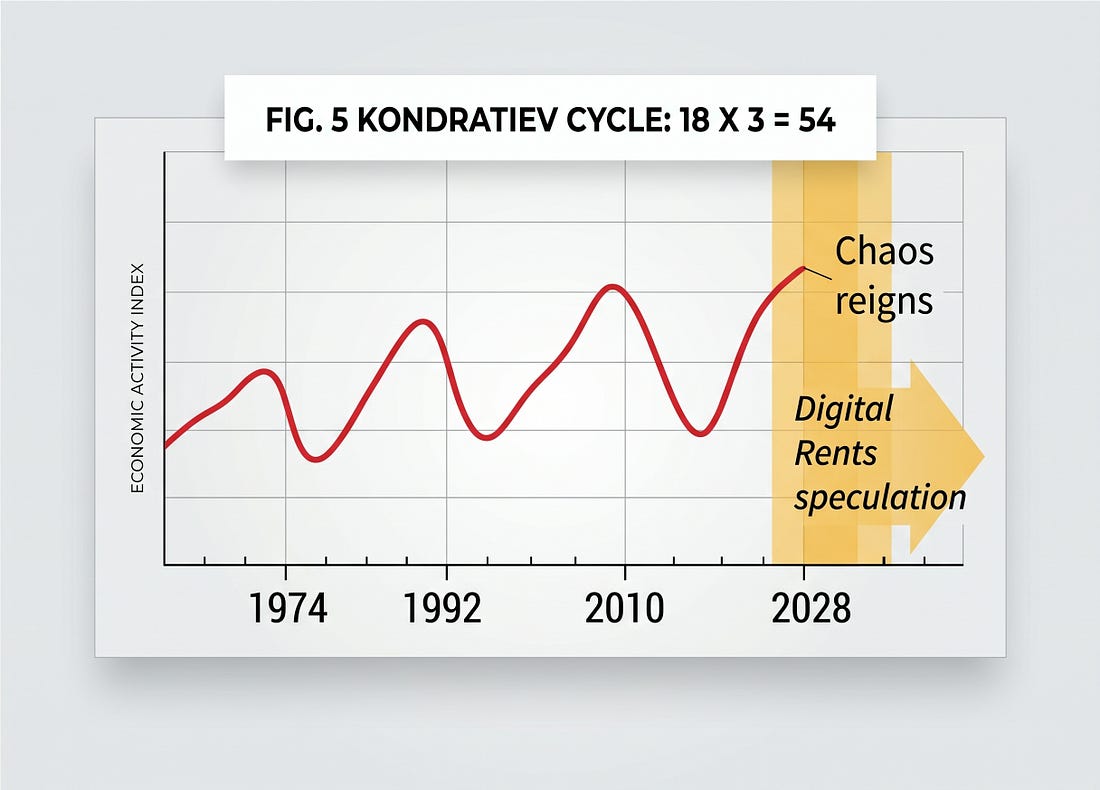
The chart shows rent highest at the centre and falling away to nothing at the margin. Wages and interest sit underneath as the base. This explains the anger around devolution. When Andy Burnham talks about sharing resources and shifting power to the regions, people at the centre hear theft. They think London’s money is being handed away. Fred says that gets it backwards. People out in the regions feed the centre. They buy what the centre produces. Their savings flow to the centre and get invested there. The rent at the middle comes from everyone’s contribution, not from the special talents of Londoners. Or New Yorkers, Parisians, or Berliners. If that rent is a common product, it should be shared more or less equally. Understand where it comes from and the politics changes. People can start acting as partners across the map, not rivals. The 18-year cycle and the AI boomFred’s cycle thesis is the part I’m asked about most. Early in the twentieth century, a Russian economist, Nikolai Kondratiev, noticed that capitalist economies run in long waves of 54 to 60 years. He never explained the mechanism. Fred says the missing piece is rent and tax. Fifty-four years is three 18-year cycles. Over those three cycles the tax burden gets heavier. The distortions pile up. People’s mental health and social relationships suffer. Eventually the system breaks.
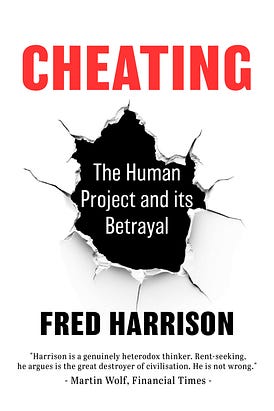
Fred’s the market busts in 1974, 1992 and 2010, with the next at 2026. In his account, the breakdown came in 2010. A decade of austerity followed. Then came the political turn to the far right, Putin’s interventions, the land grabs and the arrival of Trump. He reads all of it as the aura of catastrophe that comes when people have had enough. The new ingredient this time is artificial intelligence. Fred calls the AI boom a classic land boom. Tax breaks and money pour into one sector. That pushes up values around it. A handful of tech barons in California collect the gains. Housing markets get distorted. Some prices fall. Prices near Silicon Valley rise. People resist data centres. Elon Musk floats the idea of putting them in orbit. The label on Fig. 5 is “digital rents speculation”. It is the same mechanism as a property bubble. Money goes in because somebody expects rent to come out. Fred says the financiers are already sounding the alarm. Money speculatively invested in AI won’t earn back through value-adding activity. When investors pull out, the whole structure comes down. And that is the same pattern we saw eighteen years ago, when land prices went insane on hopes of future rent. Why left and right both failI put three objections to Fred, one from each camp. The Keynesians, neo-Keynesians and MMT crowd say government can create money and the crash is avoidable. Fred says that is an addict asking for another hit. Printing money divorces what people want from the work needed to earn it. We become an irresponsible society that says “the government should provide it”. We need the opposite. People should feel the link between what they want and what they pay for. The right says cut taxes and cut spending. Fred says the tax cut doesn’t vanish. It flows into rent. Some of it ends up in residential property, so land prices rise and homes get harder to afford. Some ends up in half-a-billion-dollar yachts in the Mediterranean. Cutting taxes only works if you collect the rent directly at the same time. So the left’s extra spending funds higher rents and a higher cost of living. The right’s tax cuts do the same. Neither side benefits ordinary people. Fred thinks most advocates are sincere. They just don’t understand how the economy works. Authoritarianism and the rent problemMy last question was about authoritarianism. As left and right fail, people reach for strongmen. And the tools of control are now digital. Fred says the fear is real. He pointed to Trump’s remarks about wanting superintelligence to dominate the world. His question is whether anyone trusts him to use it for humanity, or for another real estate deal. The danger is not robots with guns. It is people abusing technology as they have done for 5,000 years. Fred says all of it tracks back to the power to control the net income of society, which is the rent. That is the thesis of his last book, Cheating. It traces the evolution of the process across five millennia. https://shepheardwalwyn.com/product/cheating-the-human-project-and-its-betrayal/
It runs so deep that we struggle to see it. So we take the easy way out. We vote for a man who promises to stop the boats. The boats keep coming. The promise fails, and we do it again. What followsFred’s remedy is plain. Understand the economy the way the classical economists described it, with three factors of production, not two. Then reform property rights and the fiscal system. Collect the net income people produce collectively, instead of taxing the work they do. If we don’t, he says, the old pattern repeats. A huge crash, perhaps a war, someone declared the winner, and the cycle starts again. You don’t have to accept every claim to see the problem. Rent is missing from the model, and the model drives policy. That alone should worry anyone. If you think left and right are the right frame, tell me why in the comments. Challenge Fred. The best questions go to him for a future broadcast. 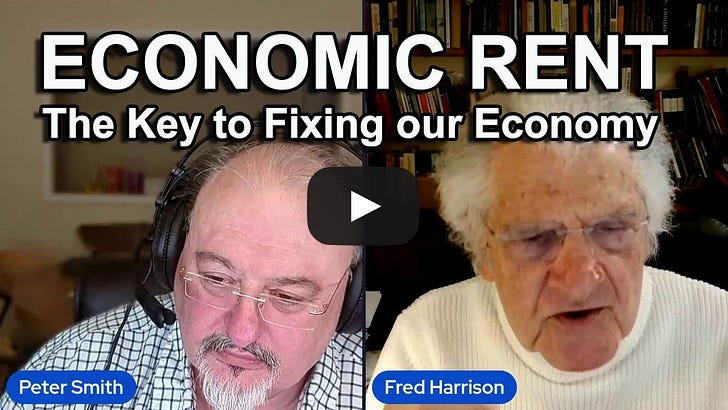
Invite your friends and earn rewards
If you enjoy Peter Smith Rewilding, share it with your friends and earn rewards when they subscribe.
|





Comments
Post a Comment