How the World’s Most Accurate Economist Can Predict the Next House Price Crash

How the World’s Most Accurate Economist Can Predict the Next House Price CrashWhat Economic Rent Actually Is, and Why It is Fundamental to understanding Economics
I want to explain something so simple that many cannot believe it would solve most of the world’s problems; it's of fundamental importance to everything we do and to how it can help us predict the future. We spend our working lives confused about why house prices move the way they do, why wages never keep up, and why nothing in politics ever seems to fix our problems. It’s called economic rent. And once you see it, you can’t stop seeing it, it changed every single political and economic issue and how a solution can be formed to fix those problems. I asked Fred Harrison this week. Is the 18-year property cycle finally over? Has it been postponed? Fred’s answer was not really about house prices at all. It’s an answer about where value comes from and who gets to keep it. 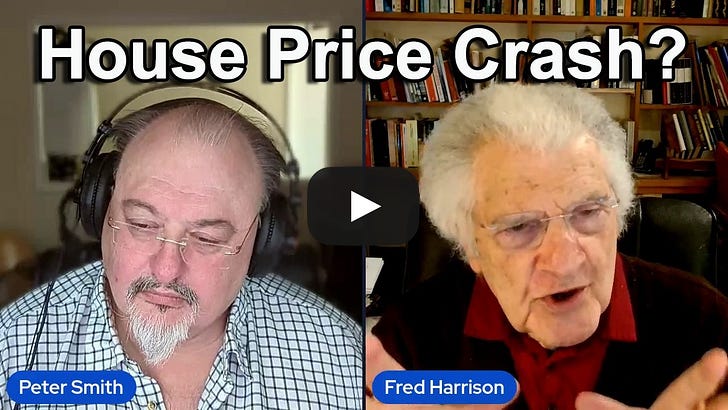
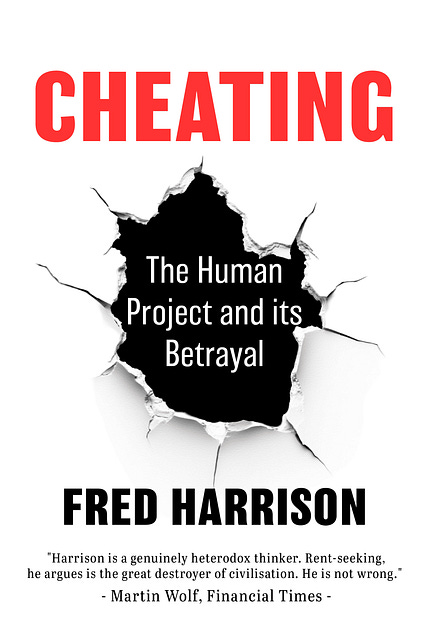
Start at the beginning Fred takes the story back to the earliest humans. Long before money, before land ownership, before any of it, people who lived by foraging were putting in extra hours to produce more than they strictly needed. Economists call this a surplus. Fred says that word makes no sense. Why would anyone work extra hours for something surplus to their needs? Nobody works for nothing. What they were actually producing was a rent, an additional flow of value they invested in themselves and in their communities. Rent is the income left over once the basic cost of producing something is covered, enterprise rewarded and costs covered. When people stopped foraging and settled down to farm, that flow of value took a new shape. It became farmland rent, the extra income a piece of land generates once you account for the effort of working it. When trade and commerce developed a few thousand years later, rent took on new layers again. Five hundred years ago, when agriculture gave way to industry, it changed shape once more, adapting to a world that could suddenly produce far more, far faster, and needed new ways of deciding who captured the gains. Where we are now Fred’s point is that we’re living through exactly that kind of shift again. We’ve entered the digital age, and rent is changing shape once more. That’s why house prices look so confusing right now, and why the winners curse section of the property cycle was muted. Digital rent, this new form of income flowing to whoever controls data, platforms, and algorithms, is layering itself on top of the old land and property rents we’re used to tracking. The result looks like chaos. It isn’t. It’s just two systems of rent overlapping at once. So when people ask Fred whether the property cycle has been postponed, his answer is no. It hasn’t been postponed. It’s ending, in the sense that the old, simple pattern of rising and falling house prices is being replaced by something more complicated. A new cycle will start. But the winners this time won’t necessarily be the same people who won in the three cycles since 1945. There will be new winners nobody expected, and some old winners left out in the cold. Why the winners will change Fred lays out a few reasons the pattern is shifting under our feet. The environmental crisis is one. Some areas will drop sharply in value as the risks become undeniable. Others, less exposed, will rise, and the wealthy will get there first, pushing prices up fastest and leaving everyone else behind. Migration is another. As people move in response to instability, property values shift in ways that catch communities off guard, and politicians under the current political consensus have no real tools to manage it. Then there’s what Fred calls political paralysis. Politicians simply don’t know what to do about any of this. That paralysis is itself dangerous, because when people lose faith that the mainstream can fix things, they turn to whoever promises to blow the whole system up. Fred calls this drift towards strongmen and extreme politics autocracy. He’s watched it happen before, in the run-up to the Second World War, when failed politicians handed people to Hitler because nobody else offered a way out. He sees the same pattern now. He’s blunt that Britain has had fifteen wars in the last five hundred years, and that the mismanagement of rent, the refusal to deal honestly with who captures value and who doesn’t, has a way of ending in conflict. Not because war is inevitable, but because societies that won’t face reality look for distractions to their problems of leadership competence and accountability. Also, the capture of foreign rents is an incentive to go to war. I’m from the government, and I’m here to help… Fred is particularly cutting about the tech industry. When Silicon Valley executives say they want government to step in and regulate AI, he doesn’t take that at face value. What they actually want, he argues, is to lock in the power their new technology gives them, to build a moat around it, and to make sure they keep the largest possible share of the digital rents now being generated. I brought up Peter Thiel in our conversation, because it’s a perfect illustration of the point. Thiel has been a prominent supporter of Georgist ideas, land value tax and all, for exactly the reason Fred describes. He knows landowners have been capturing economic rent for centuries. But Thiel is a rent seeker in his own right, fighting for a bigger slice of a pie that’s only so big, wanting the digital rents for the platforms he’s built rather than the land underneath them. It’s a fight between different types of monopoly, not a fight against monopoly itself. The hidden mechanism Most of us go to work, earn a wage, and pay for what we take out of the system through our own labour. That’s accountability. But homeowners are also, often without realising it, extracting a large chunk of value through rising property prices that we did nothing to earn. It doesn’t fall from the sky. Society as a whole produces that value through the roads, schools, transport, and safety that make a location desirable. But it gets captured privately by whoever happens to own the land underneath it, while the rest of us get taxed on our wages to make up the difference. That’s the injustice at the heart of Fred’s argument. We tax work, which punishes effort. We barely touch the unearned gains that flow to landowners simply because they hold a scarce resource everyone else needs. If we reformed that, taxed the rent instead of the labour, Fred says the result would be a more stable, more flourishing society, one where everybody who paid their way through honest work would actually come out ahead, and nobody could quietly extract value they didn’t produce while dodging the consequences. Why Fred has been so good at predicting house price crashes Fred’s ability to navigate the 18-year boom-and-bust cycle is because he views economics through the lens of economic rent; it's no crystal ball, as Fred puts it. It’s a pattern that keeps recurring, documented across history, and it’s why he keeps returning to the same basic argument book after book, interview after interview, even though he’d rather not keep promoting himself as some do as the world’s most accurate economist. The property cycle isn’t cancelled. It’s playing out inside a more complicated picture than the simple story we got used to in the late twentieth century, one shaped by environmental pressure, migration, digital rent, and a political class too paralysed to face any of it. If you want to understand where house prices and the whole economy are heading over the next eighteen years, this is the place to start. Not with interest rates or forecasts. With the simple question of who is capturing the rent, and who is being taxed. Fred’s latest book explains all and is available here: https://shepheardwalwyn.com/product/cheating-the-human-project-and-its-betrayal/
You're currently a free subscriber to Peter Smith Rewilding. For the full experience, upgrade your subscription.
|




Comments
Post a Comment