Fake Professors, DEI Hires, and the Real Solution MLK Gave us Before he was Shot

|
|
|
|
|
|||||||||||||||


In this essay, I want to give you the real structural solution to that unfairness, and the genuinely fair way to secure diversity, equity and inclusion: the one Martin Luther King gave us himself, in the last passage of his last book, written the year before he was shot. I say that half in jest, because many a conspiracy theorist could have a field day with how many people seem to get themselves fired, sidelined or worse the moment they take this particular argument seriously and try to act on it. Read on to find that real solution.
 |
DEI Hire ‘Exhibit A’
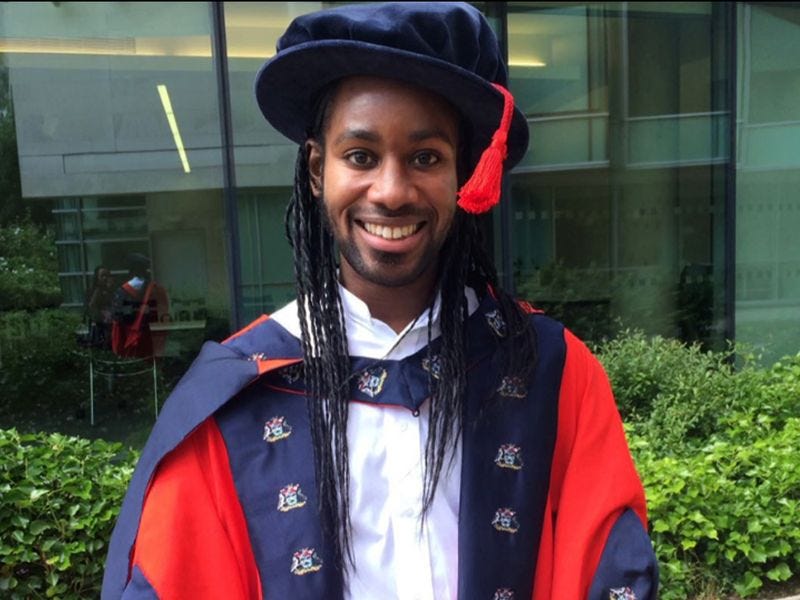
Jason Arday resigned his Cambridge professorship this week. He had been, at thirty-seven, the youngest Black professor in the university’s history, appointed to a chair in sociology in 2023 on the strength of a personal story that moved a great many people: dyslexia, developmental delay, autism, non-verbal until eleven, illiterate until his late teens, and then a PhD, and then Cambridge. As someone who is dyslexic myself, I found that story genuinely uplifting, the sort of thing you want to be true without reservation. What has now unravelled it is a set of plagiarism allegations and outlandish falsehoods; he does seem to be a pathological liar and fantasist. Arday says the scrutiny has “gone far beyond scholarly disagreement” and denies deliberate wrongdoing. If the allegations do hold up, Arday becomes ‘Exhibit A’ for the excesses of the DEI process, and his own conduct, not the scrutiny of it, becomes what harms real equality and diversity and feeds the backlash this essay is about.
I am against racism but also want truth to be front and centre, and the DEI process has become a mechanism for hiding truth and just another tool in those climbing the greasy pole of organisational structure, becoming a toxic mess which is inviting a backlash which helps no one.
The Arday affair is a symptom, not a disease. It is what happens when an institution tries to treat a structural problem with a cosmetic remedy, and then the remedy itself becomes toxic.
“charity is false, futile, and poisonous when offered as a substitute for justice” Henry George 1894
DEI Unraveling
Consider the scale of the underlying mismatch that diversity, equity and inclusion hiring and admissions are meant to paper over. When Peter Arcidiacono and his colleagues got hold of Harvard’s own admissions data during the Students for Fair Admissions litigation, they found that non-ALDC African American applicants, that is, those without the boost given to athletes, legacies, the dean’s interest list or children of staff, made up eleven per cent of the applicant pool but forty-one per cent of the bottom decile of Harvard’s own academic index. Among that bottom decile, two applicants out of nearly six thousand were admitted. When the Supreme Court finally forced elite universities to stop using race as a factor, MIT’s Black enrolment fell from sixteen per cent of the incoming class to five within a single admissions cycle. Thomas Espenshade’s earlier work found that Black applicants scoring 1150 on the old SAT had roughly the same odds of admission to elite private colleges as white applicants scoring 1460 and Asian applicants scoring a perfect 1600. At New York’s Stuyvesant High School, which admits on a single exam, thirteen Black students entered a freshman class of nearly a thousand this autumn, in a city where Black and Latino children make up seventy per cent of the public school population. These are not fringe or contested numbers. They come from the universities’ own data, forced into the open by lawsuits and freedom of information requests that the institutions fought at every turn.
Most of the argument I have read about this over the last week has been strikingly narrow, two poles, opposites apart. Two explanations for the mismatch are on offer, and I think both of them are wrong.
The Genetic argument against versus the institutional racist argument
At the centre of the argument is Nathen Cofnas, who has built a career on what he calls ‘race realism’ and is now across the podcast circut since the Arday story broke: that the gap reflects an innate difference in cognitive capacity, and that in a genuine meritocracy, Black Britons and Black Americans would simply be scarce in the upper reaches of academic and professional life, sport and entertainment aside. They reach for sport constantly, because it is the one place the pattern looks good for them to excel in: runners of West African descent dominate sprinting, and Kalenjin runners from Kenya’s Rift Valley highlands dominate the marathon, so why not assume the same clustering runs through cognition too.
I trained as a geneticist before I ever wrote a word about rewilding or land economics, and I think the genetic argument has some truth, but it is badly overstated. The best-studied candidate is ACTN3, the so-called speed gene: elite Jamaican sprinters do carry the fast-twitch variant at markedly higher rates than the general population, roughly three per cent hold the slow variant against eighteen per cent worldwide, so there is something real there. But the same gene shows no consistent association at all with the Kenyan and Ethiopian distance runners who dominate the marathon; their advantage turns out to be a diffuse, polygenic story involving altitude adaptation, oxygen uptake, limb proportions and a training culture of running to school from early childhood, not one identifiable variant. Even in the single case where the folk explanation looks most obviously true, the genetics underneath it is thinner and messier than the story suggests. Cognition is far more polygenic and far more environmentally sensitive than beating the 10s time in the hundred metre dash, so the genetic case for academic underrepresentation is weaker still; it survives because it is convenient for people who would rather not examine what really causes inequality, a taboo that must be expunged from our discourse by powerful vested interests.
What the gnetics verses ricism misses
What actually steers young people is upbringing and culture, reinforcing choices that may or may not have any genetic basis at all, and a mature industry ready to welcome people into the industry of cultural homogeneity, be that academia, the law or industry.
I am often astounded by cultural homogeneity in professions; walk into the Channel 4 newsroom of a wildlife production company in Bristol and it’s identikit cultural homogeneity, regardless of race. Public School, elite university and awfully posh voices regardless of sex or race. I feel this as a man from working-class origins with a pronounced regional accent.
I grew up in the traditions of the English North East coalfields, and nearly every boy in my year at Cramlington High School took physics, mathematics and chemistry at A-level and went on to an engineering degree of one kind or another. That was not genetic destiny. It was cultural gravity. For two centuries the North East was Britain’s Silicon Valley: the shipyards and pits of Tyneside and Wearside built the first railways, the marine steam turbine, the hydraulic crane, and, whatever my American friends prefer to believe, the incandescent light bulb, which Joseph Swan demonstrated publicly in Newcastle in January 1879, the better part of a year before Edison filed his American patent.
Two centuries of a region hot-housing engineering produced generations of boys who did engineering, because that was what was rewarded and what its schools were built to teach. I will grant there may be a faint genetic residue in that story too, since people from across Britain who were adept with machines migrated into the area because the yards and mines were where that aptitude was rewarded, but if there is a genetic signal in it, it is a whisper behind two centuries of industrial demand.
The girls in my sixth form went overwhelmingly into the caring professions, with exceptions in maths and statistics and one who read civil engineering. So: a little genetics, a great deal of culture and expectation, produced the specific shape of Cramlington High School’s Sixth Form leavers in 1988, and the same holds everywhere. Opportunity, expectation and some genuine clustering of aptitude, itself usually downstream of migration into a hot economy. I have always suspected, though I cannot prove it, that a fair number of the high-functioning autistic men gravitated toward that same industrial hot house over its two hundred years, for reasons that had nothing to do with race.
My own path was the odd one out. Biology was thought of as a girls’ subject at Cramlington, and I was one of only two boys in my year to take it at A-level; the other went on to read mathematics and ended up a political analyst. Biology was my passion, though, and nothing was going to dissuade me from it, not the cultural pressure and not the family disapproval it stirred up, my own parents excepted, who backed me without hesitation the whole way through. I was thought odd for it. I have always suspected one uncle decided I must be gay, on no better evidence than a boy who chose biology over physics. The subject itself carried no genetic destiny whatsoever; it was simply not what boys from that town were supposed to want.
Those industries have since collapsed, and the schools and specialisms that fed them have thinned out with them, so today’s graduates from the same towns gravitate toward whatever professions still exist there; engineering and pure sciences are a shadow of what they were in 1988. That collapse, not any gene, is what shrank the North East’s contribution to British engineering. It is a small, personal and entirely non-racial demonstration of the same mechanism I think is driving the gap Cofnas wants to explan biologically: an economy concentrates opportunity in a place or a group for reasons of history and land, a culture forms around that concentration and reproduces it for a generation or two, and when the concentration moves or collapses, the culture and the outcomes it produced move or collapse with it. Nobody’s genes changed in Cramlington between 1988 and now. The closure of coal pits and the dockyards did it.
Racisim
The second explanation, which has become institutional orthodoxy across British and American universities and much of corporate life, is that the gap is straightforward racism, present and ongoing, and that the remedy is to build race into the admissions formula and the hiring panel indefinitely: a permanent thumb on the scale to correct a permanent bias. I understand the moral instinct behind this. But it is a palliative, not a cure, and like most palliatives it has side effects. It recruits students into institutions with a large academic gap between them and their cohort, which the sociologist Richard Sander and others have shown correlates with worse outcomes once they arrive, not better. It gives a resentful public, and a resentful commentariat, the grievance it is looking for. And it does something crueller still: it casts a shadow of doubt over every Black graduate and every Black professor, Arday included, whether or not their achievement was in fact entirely their own, because the institution has openly told everyone that in this case, achievement is not the only criterion. DEI admission policies in no way correct the fundamental problem.
Martin Luther King
I think Martin Luther King worked out what that mechanism was, near the end of his life, and that we have quietly ignored the conclusion because most of the privileged are truly terrified if we finally got the real reason why we have inequality.
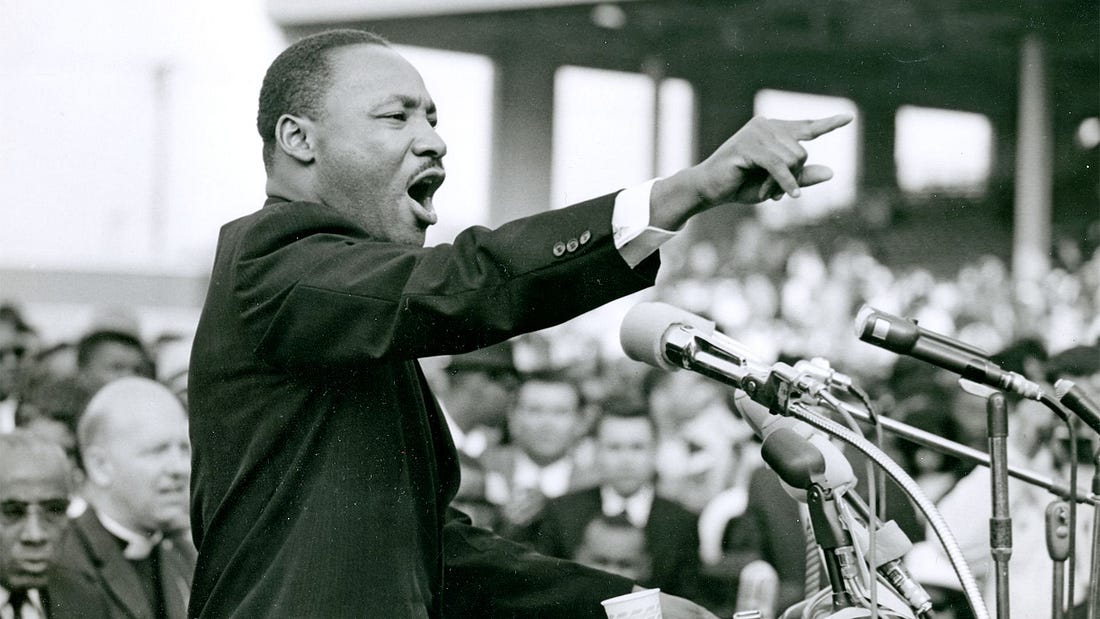
In his final book, Where Do We Go from Here: Chaos or Community?, written in 1967 in a rented house in Jamaica with no telephone, King moved decisively away from the language of moral appeal and towards the language of political economy. He leaned openly on Henry George, quoting George’s argument that the work which extends knowledge and enriches civilisation is never the work of people driven by bare animal necessity. This is exactly the mechanism that prevents people attaining the educational level that would prepare them for elite education in equal measure.
 |
King concluded that the most direct route out of poverty was not another anti-poverty programme but reclaiming the economic rent of society, all of the economy's monopolies as public revenue and not taxing normal people’s income or trade. To abolish poverty at its root. To have cheaper living costs, higher wages, and ensure all have the resources to not fear poverty.
He did not frame it as compensation owed to one race by another. He framed it as the recognition that a market economy which lets whoever controls land and monopoly capital capture the unearned increment of a growing society, while denying the people at the bottom the income floor that would let their children simply think about something other than survival, will keep reproducing the same racial pattern indefinitely, however many university admissions committees try to override it by hand.
There is now a substantial empirical literature that backs King’s instinct up better than he could have documented it himself. Sendhil Mullainathan and Eldar Shafir’s experiments, published in Science in 2013, found that inducing people to think about a large unexpected bill knocked ten to thirteen points off their performance in cognitive tests, an effect comparable to losing a full night’s sleep, and that the same Indian sugarcane farmers scored measurably worse on identical tests before harvest, when they were poor, than after it, when they were briefly not. Poverty does not merely deny a child books or tutors. It rations the mental bandwidth a growing mind has left over for anything other than the immediate crisis.
A child whose household is not preoccupied by rent arrears, eviction risk or the electricity being cut off is a child with more of that bandwidth free for algebra. This is not a racial mechanism. It is an economic one that happens, in Britain and America both, to fall disproportionately on the descendants of people who were for centuries deliberately excluded from owning anything that would let them capture rising land values.
That exclusion is not ancient history; the National Housing Act of 1934 and the redlining maps that followed it explicitly withheld mortgage insurance from Black neighbourhoods for three decades, during the period the GI Bill was building the white American middle class on the back of federally subsidised home equity. The effect compounds through land, which is the one asset that does not depreciate the way a car or a wage does: homes in majority Black neighbourhoods are today valued on average forty-eight thousand dollars below equivalent homes in majority white ones, a cumulative loss researchers put at some hundred and fifty-six billion dollars in unrealised equity.
Because American school funding still leans heavily on local property tax, majority Black, Latino and Asian districts receive some twenty-three billion dollars less in school funding each year than majority white ones, for the simple reason that the land beneath their schools was never allowed to accumulate the value that funds better ones elsewhere.
This is the argument DEI never makes and genetic determinism is designed to ignore. The gap between the Harvard bottom decile and the Harvard top decile is not a gap in genetic endowment, and treating it as one, as Cofnas effectively does, is bad science. Nor is it a gap that a permanent racial preference in admissions will close, because the preference does not touch the land and economic rent structure that produced unequal school funding, unequal home equity and unequal household bandwidth in the first place; it only redistributes a small number of university places while leaving millions of families in poverty.
Reclaiming the monopoly of land as public revenue, taking taxes off incomes, is the fundamental and systemic fix to the problem that creates inequality. It creates the level playing field that will one day allow people of different races to enter Harvard on a fairer basis. It will one day allow professors to be appointed on merit, real merit from ability, not background. And not which protected characteristics are fashionable or which admissions tutor is looking to massage their diversity report.
What King discovered was that racial inequality was really about economic justice, not inherent racism. And the fundamental issue in economic inequality is who owns the monopoly of rent-bearing assets and the favourable position that has in the tax system. It is the unearned wealth of rent-seeking, those getting rich without working, that gives those families the luxury of concentrating on higher things like education.
Workers work hard but are taxed exorbitantly, so they never get rich or have the luxury to concentrate on education and professional position. Rent seekers are rich and pay little taxes on their wealth and do all they can to ensure their offspring maintain an educational and professional advantage.
Take away that structural economic injustice and watch society explode with meritocracy - within a generation, all the DEI cultural wars will cease to have such significance.
Arday may be a fantasist and liar, but Cambridge did not need to have this argument in the way it is currently having it, in public, over one man’s thesis and tall tales of how many marathons he ran. It needed to have the learning and bravery to drill down and find the real correlations and causalities of discrimination and advocate for fixing the problem at its root.
It’s about who gets to own land and other monopolistic assets, about who has the time and economic comfort to prioritise education and learning and who does not.
The backlash now underway, in Cambridge, UK and in Cambridge, Massachusetts, is what happens when a society ignores the economic rent problem and thinks they can just fix it with a sticking plaster.
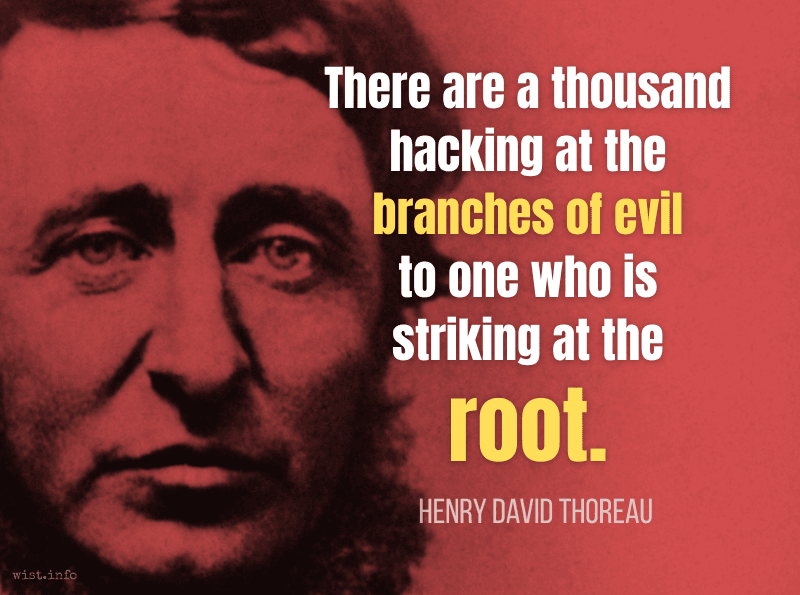
Thoreau guides my thought, and so it should for all …
 |
Invite your friends and earn rewards
|
||||||||||




Comments
Post a Comment