The Land Value Trap Is Robbing Our Young of a Future

The Land Value Trap Is Robbing Our Young of a Future£2.4 trillion sits under the over 65s' UK homes while the young go without. Fred Harrison explains why the riots won't change that.
Fred Harrison says the riots across Europe will achieve nothing. He thinks he knows what would. It needs the old and the young on the same side. Young people are angry. The young people I meet blame it on the boomers, disgusted that their privilege has robbed them of a future. Riots in Paris, protests in Madrid and Berlin, a whole continent of people under 30 who have looked at their prospects destroyed and feel cheated. They’re right. They have. 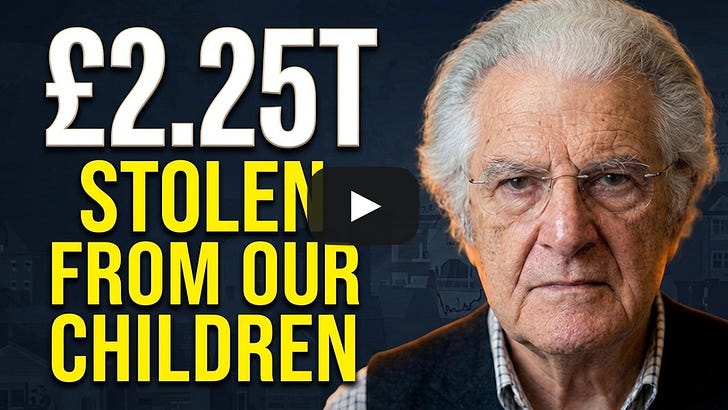
I talk to young people a lot, and they tell me the same things. There are no jobs worth having. Careers go nowhere. They’ll never afford a home. Rent eats a huge share of what they earn. Their lives feel miserable, and nobody will tell them why. I put all of that to Fred Harrison on the podcast. Then I asked him a simple question. Why should young people listen to an old duffer like you? His answer was an offer. “What we need today is an alliance between the young people and the old duffers like me.” £2.4 trillion doing nothingFred started with a number. A few days before we recorded, a headline said UK housing wealth owned by the over-65s had topped £2.4 trillion. Most of that is land value. It sits under the homes of people like Fred, and it does nothing. That wealth could pay for teachers. It could fund the enterprises that give young people jobs at wages that let them buy a home. Instead, it stays locked beneath the floorboards while older homeowners dream about spending it when they’re older still. The young are right to be furious. Why the riots won’t workSmashing windows in Paris won’t change anything. Fred is blunt about it. Whether governments pay attention or not, it’s useless. The reason is simple. Nobody has told these young people the root cause, so they can’t make a specific demand. Vague anger gets vague answers. Nothing changes. Here’s the root cause as Fred sees it. The system is built so that growth gets recycled through property rights and public policy into land values. Productive people generate the wealth. Most of that wealth just accumulates in the land value underneath somebody’s house. Take tax cuts: more money stays in the private sector, which sounds like good news for workers. But most of it flows into location values and pushes up house prices. Working people end up no better off. The owners of land end up richer. The people in the middle make this harder. They’ve just bought their homes. They hope to bank the gain. They back the tax cuts. They’re the last people who will ask for change, which means the push has to come from somewhere else. The betrayed generationParents used to want to leave their children a better economy than the one they inherited. That drove every generation forward. We’ve put it into reverse. We enjoy public services today and send the bill to the young through the national debt. We sit on wealth we hope will pay for our old age, or pass it to our own children and make them privileged. The system grinds on, and the next generation pays for it. Fred also sees a longer pattern. He says we’ve had three 18-year cycles of growth, and we’re now in the downturn. In the past, when the system broke down, people reached for a war to shake things up. After each war, they rebuilt the same failed model. Collapse, war, then the same mistake again. The trap I grew up when “baby boomer” was a term of hope. We were all going to get university educations, high-tech jobs and great health care. It was meant to be wonderful. We turned that ambition into a disaster by pouring our money into land values. We were told we’d get wealthy from the ever-rising price of the land under our houses. That’s the trap. Most homeowners never cash in. We’ve been brainwashed into thinking these high house prices are the solution to our economic problems when they absorb our productivity and effort and leave our economy hollowed out, uncompetitive on the world stage; that land value is now internalised into the cost of doing business, the cost of living and the cost of providing public services. High land values mean fewer jobs, lower wages and a trajectory to poverty and national destitution. The official statistics make it worse. They count the value we circulate back into location values as value added. It isn’t. It’s wealth recycled to the people who own the land. So the owners get richer doing nothing, and the young get poorer no matter how hard they work. Fred says Britain has nearly a million young people who are neither in education nor at work. We can’t afford that. And the system that produced it rarely gets questioned. Squeezed in a viceTwo things squeeze the young. The first is the price of a roof over their heads, whether they rent a poor flat or try to buy one. The second is pay that can’t keep up. The gap between what they earn and what life costs keeps closing. Land value sits inside everything else too. The shop pays it. The business pays it. The charity pays it. The council pays it. Before anyone can do anything good for the community, the rent has to be extracted first. The answer is to widen that gap. Take the tax burden off wages and trade. Make investment productive. Bring down the cost of housing. Collect the rent of land for the public instead of leaving it with the owners. Every great thinker on the economy over the last 200 years has pointed the same way. Hardly anyone under 40 has been taught it. Why “build more houses” failsThe Telegraph ran a piece saying property is becoming a chain around our necks. Fair enough. But the best it could offer was to build more homes. That won’t work. The price of the location rises faster than you can build dwellings. Another paper ran a story about London prices suffering their biggest drop since the financial crisis as rates bit. Nobody asked why this cycle keeps repeating. There’s a common cause, and they won’t dig for it. Then there’s Burnham. He’s hinted that he understands the real answer, probably because serious economists have talked to him. Then he punted it in the long grass. What he’s offering instead is a loan guarantee to help people buy. Any fool can see what that does. It pushes prices up by however much you offer. It tells a young person to borrow more against a flat that will probably lose value, in a building that will probably fall apart. And it takes Britain back to the post-war settlement, the same one that led to the boom and bust of the 80s and 90s. What I’d ask of young peopleFred’s challenge to the young is direct. Turning to communism isn’t the answer. Turning to the right isn’t the answer. Handing the vote to Donald Trump because he says he’s good at deals isn’t the answer. So where should they look? Hold a meeting in the town hall. Ask the professors why the system keeps failing. If they say they don’t know, don’t accept it. Turn to the people who claim to know. Many will be charlatans. A few will make sense. Fred says the old are entitled to be a little angry with the young. They have the energy and the intelligence, and some of it is going to waste. Be angry, he says, but be informed. Young people claim to want to protect the environment but they have nsimilarly no understanding that environmental degradation can be reversed. If you’re young and you care about nature, understand why or economy is enforced, just like housing; the economic rent must be paid first. We have to pay it before we can save one rare species.
What you can doTalk to your children. Talk to your grandchildren. Send this piece to one person under 30 and ask them a single question: why does the system keep failing? Fred and I want young people watching the conversations we have. Frustrated is fine. Frustrated and informed is better. If a few talented TikTokers pick up the message, better still. The young and the old can break the trap together. Neither side can do it alone. Fred’s books are available here: https://shepheardwalwyn.com/fred-harrison-author/ Invite your friends and earn rewardsIf you enjoy Peter Smith Rewilding, share it with your friends and earn rewards when they subscribe.
|






Comments
Post a Comment