Bullshit Capture

Bullshit CaptureCarbon capture doesn’t work; the only technology that actually pulls carbon from the air is the one we keep paying to destroy.
Now I turn my eye to carbon capture. It is, in my view, the most outrageous scam yet devised to defraud the public, while the climate carries on collapsing.
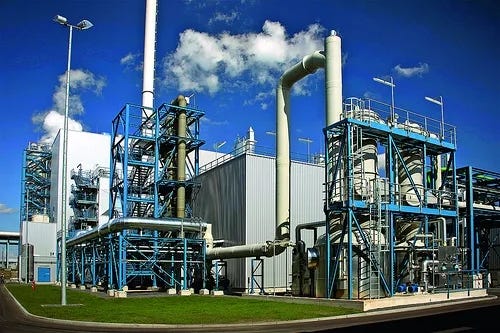
Start with the physics; this is where the whole rotten edifice should have collapsed before a single billion was spent. Pulling carbon dioxide apart and burying the carbon takes energy, a great deal of it, and we do not have anything like the spare, cheap energy required to do this at the scale being promised. Industry has built an entire language of capture and burial around a process that has never been demonstrated to work at the scale its backers claim, and has already been used to justify tens of billions of pounds in public money, with hundreds of billions more in the pipeline. This is not ordinary corporate greenwash. This is corruption on an industrial scale, dressed up as engineering and a lie politicians can hide behind, giving comforting words to a worried public that their fears are being taken care of. Oilprice.com ran a piece last week reporting that the carbon capture boom is starting to crack. Even the published figures, which have had the full corporate massage treatment and take no account of the energy burned to run the capture process in the first place, are damning enough on their own. An Institute for Energy Economics and Financial Analysis review of thirteen operating CCS projects worldwide found that most were capturing well below their design rate, several failed outright, and the Global CCS Institute counts only fifty facilities operating globally in 2024, between them capturing something in the order of one thousandth of global emissions. One thousandth. That is the entire contribution, after two decades and hundreds of billions of pounds of pledged investment, of a technology that oil majors and governments have presented as central to the decarbonising industry. The idea that we can decarbonise through CCS is a fundamental lie, and governments hide behind it because they do not want to tackle the real issue. The real issue is reducing how much carbon and pollution we produce in the first place. The whole green technology industry; solar, wind, carbon capture sells us a picture of a green future arriving through a nirvana of technological progress. It will not arrive. It is a vast machine for extracting money from the public while the underlying problem goes untouched. Environmentalism used to run on a simple hierarchy: reduce, then reuse, then recycle. It is the reduce part that politicians and businesses have quietly dropped, because reduction threatens profit and growth figures in a way that a subsidised technology fix does not. None of this requires a new invention. It requires a government willing to tax pollution directly and lift the same amount off wages, trade and genuine investment, the productive kind, not the monopoly kind. Do that, and everybody is better off apart from the corrupt politicians, the fossil fuel lobbyists, the bankers, the corporate solicitors and the financial service lackeys who live very well off the arrangement we have instead. Apply the same logic to land, to the space nature needs to exist, and you find the same theft behind the biodiversity crisis that you find behind the climate one. None of this has stopped the money moving. Germany has launched a five point seven billion dollar Carbon Contracts for Difference scheme. The UK government has committed up to twenty-nine billion dollars over twenty-five years to CCUS and hydrogen clusters. Denmark’s Aalborg Portland has signed a two and a half billion dollar contract with the state energy agency to bury its cement emissions underground. In the United States, adding capture to a gas plant costs twenty to thirty dollars per megawatt hour, potentially doubling the cost of the power produced; in Europe, analysts at Agora Industry and Oeko-Institut now put the full cost of capture, transport and storage at between one hundred and seventy and three hundred and forty dollars a tonne, at least half again what earlier forecasts promised. Every one of these numbers describes the same transaction. The state, or the ratepayer, or both, pays a premium so that ExxonMobil, Shell, Chevron, TotalEnergies, Equinor and Occidental can keep extracting and selling hydrocarbons under the label of a low-carbon transition. At the same time, the underlying physical problem, carbon in the atmosphere, is barely touched. Carbon capture defenders are not stupid and they are not, in some cases, lying about the engineering. CCS works, in the narrow sense that you can strip CO2 out of a flue gas stream and put it somewhere else, at a cost. What it is for, politically, is licence. It allows a gas plant to keep running, a cement kiln to keep firing, an oil well to keep pumping, while its owners describe the output as low-carbon. It converts a demand to stop doing something into a demand to pay someone else to pretend you have mitigated it. And because the underlying activity remains enormously profitable and mitigation is expensive, the only way the sums work is for the state to pick up most of the bill. This is not a technology failing to meet its promise. This is a subsidy architecture that is, in effect, corruption rewarding its participants. I have spent this year writing about a nearly identical process in the countryside rather than the power station; the two issues are the same argument. In Fuck Tree Planting I went through the Friggens study of Scottish moorland, birch and Scots pine planted onto heather twelve to thirty-nine years ago, carefully, on appropriate land, by people doing everything the guidance told them to do. Zero net gain in ecosystem carbon at any of the four sites. A net loss at one of them. The soil under those trees had been quietly releasing carbon that had taken centuries to accumulate, because the fungal community that suppresses decomposition in heathland is not the fungal community that is in birch and pine woods. Eleven million saplings went into the ground in Turkey in a single day in 2019 and ninety per cent were dead within three months. BrewDog spent eight million pounds on the Kinrara estate to go carbon negative and by 2025 had lost half its saplings to failed digger-mounded plantings on peat, then sold the estate and walked away from the obligation entirely. Underneath the subsidies and the government;s guarantees for future revenue investors are making a killing inflating these fake markets into asset bubbles. These asset bubbles follow the same trajectory as house price bubbles and now the the bubbles are collapsing as the credit expansion of the last 18 years comes to a halt and the global financial collapse is appearing all around us Scottish marginal land became the new gold rush, speculators thought they could stack its value with Woodland Carbon Code credits, Peatland Carbon Code credits, Biodiversity Net Gain units and Agricultural Property Relief protecting the whole pile from inheritance tax. Land that was worth perhaps three hundred pounds a hectare fifteen years ago was changing hands at fourteen thousand. Buyers were modelling carbon returns at a hundred pounds a tonne against an actual market rate closer to twenty five. None of this was ecology. It was a speculative bubble constructed entirely out of government-approved paper instruments, and the Scottish Land Commission’s own 2026 report now reads as its post-mortem: the market frozen, the natural capital premium mostly gone, and nobody with any plan to restore the peat that was disturbed or replant the saplings that died, because the institutions that bought the land were never ecologists. They were asset managers who had noticed that Net Zero language gave cover to a very old trade: buy the land, watch the paper value rise, sell before anyone checks the small print.
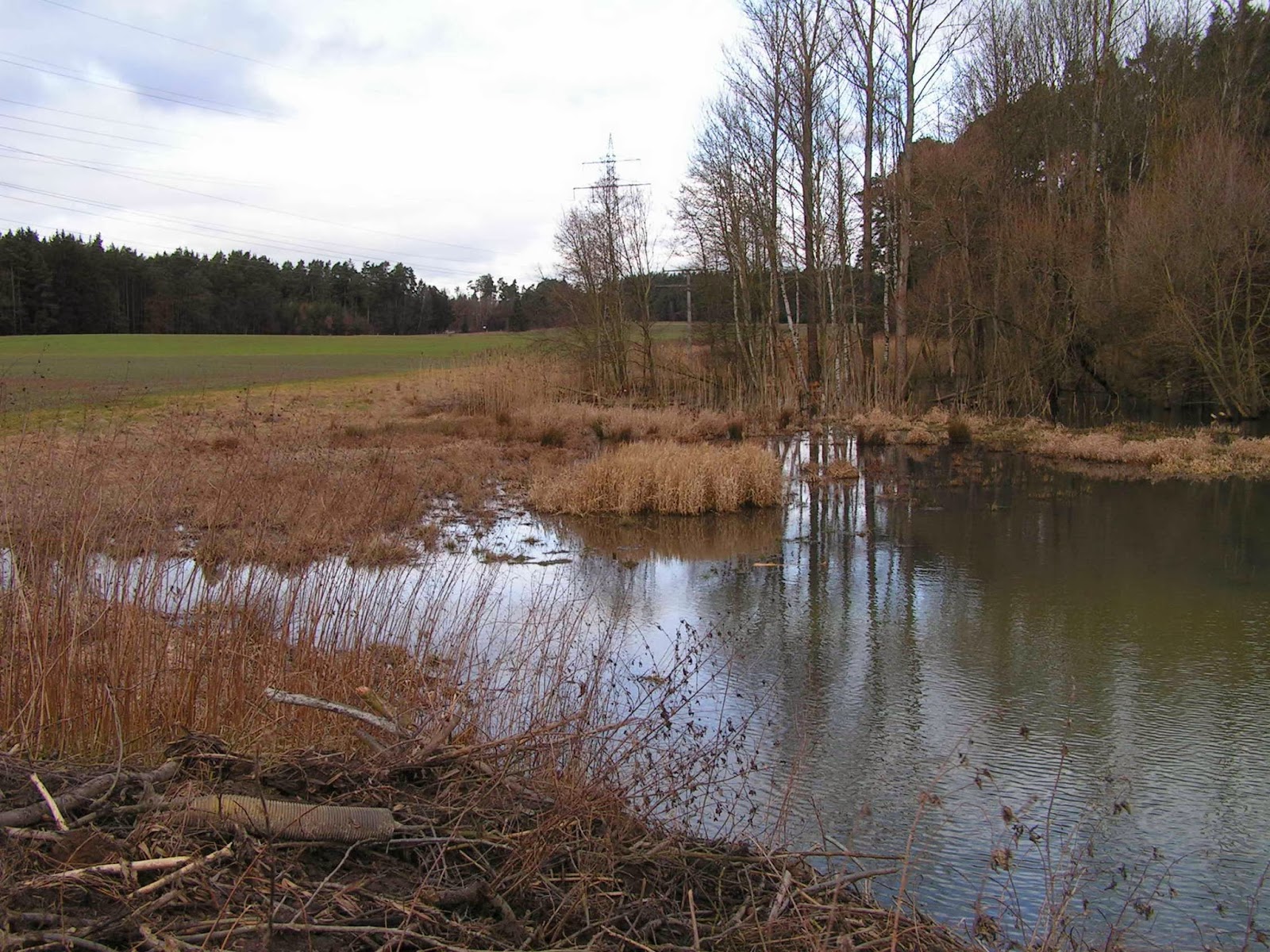
Biodiversity Net Gain is the same mechanism arriving slightly later to do the same job. It creates a market in units of nature that can be bought, sold and offset against a development a hundred miles away, and every account I have seen from the ground describes the same outcome as the carbon schemes: a monoculture of plastic tree tubes in a field margin standing in for the habitat that was destroyed to build the thing the credit was meant to compensate for. It is a permission slip for destruction, priced and traded. Look at the three of these side by side, carbon capture, carbon credits, biodiversity net gain, and the family resemblance is exact. In each case there is a real environmental cost that a government has decided not to price directly, because pricing it directly would mean taxing a polluter or a landowner in a way that would affect government donors and those who control politicians and political discourse. Instead, the government invents an instrument: a certificate, a credit, a unit, a contract for difference. The instrument requires verifiers, brokers, consultants and a secondary market, all of whom take a cut before a single tonne of carbon is captured or a single unit of nature is restored. The instrument is priced not against what it delivers, which is frequently very little, but against what buyers expect it to be worth in five or ten years, which turns it into a speculative asset. And because the underlying activity, the emitting, the destroying, the extracting, remains profitable throughout, the entire cost of the fiction is carried by the taxpayer through subsidy, or by future generations through higher living costs and a climate and biodiversity debt that compounds while huge profits are funnelled into the pockets of the grifters and middlemen. This is not a coincidence of bad implementation, project by project. It is what happens every time a state that is captured by the interests it is meant to regulate is asked to solve a problem that would require those interests to actually pay for what they cost. Fred Harrison’s eighteen-year land cycle explains why the money finds land and land-adjacent instruments in particular: credit is cheap, productive investment is scarce, and any policy that can be capitalised into a purchase price will be, because that is the only kind of return the system currently rewards. Carbon capture, tree credits and biodiversity units are simply three of the vehicles currently available for that capitalisation. There will be others. There always are. The solution is not a better verification standard for carbon credits, or a tighter design specification for habitat restoration, or a revised methodology for biodiversity units, though I am sure people are drafting these as I write this. The fix is to stop inventing instruments and start pricing the actual negative externality. Tax carbon at extraction, so that the cost of burning it is carried by the people who profit from selling it, rather than laundered through a capture subsidy paid for by everyone else. Reclaim the site value of land, so that the speculative premium currently available from stacking paper credits onto marginal hill ground disappears, and the only way to make money from that land is to use it productively or let it recover naturally, both of which exceed by many orders of magnitude current profections. Make it pay to pollute, not get paid to pollute, and the entire industry of bullshit capture, the consultants, the verifiers, the brokers, the asset managers modelling returns on credits that will never be honoured, loses its reason to exist overnight. All this revenue can be used to remove taxes on work, trade and real investment, and it stimulates an economic miracle: more jobs, higher wages, much cheaper housing and living costs. You solve all the problems we are facing using the power of the free market and a moral system that stops economic booms and busts, and makes our economy honest instead of one that rewards corruption and waste. None of that requires new technology. It requires a government willing to reclaim economic rent rather than manufacture it, which is precisely the thing our governments, of every colour, have shown no interest in doing for a very long time. Until one does, expect the pattern to repeat. Expect a new instrument, dressed in the vocabulary of the last one that failed. We are subsidising failure and corruption. We already have a carbon capture technology that works. It is not trees per se. It is the complex habitats that surround them: wetlands, wet woodland, the deep upland and lowland bogs, the very ground that pulls carbon down and holds it there. It is the habitat that real rewilding creates when we hand useless land back to nature, by reclaiming ground rent as public revenue instead of letting it sit in private pockets. Ricardo and George told us how to do this over a hundred years ago. |





Comments
Post a Comment