The Flood and the Future: Rethinking Land, Water, and Rewilding in Britain
Recent winters have brought calamitous flooding to the UK, demonstrating the raw power of nature. While it is convenient to attribute these disasters solely to climate change or freak rainfall events, a deeper look reveals a more uncomfortable truth: we have fundamentally mismanaged our land. For decades, conservationists have warned that by tampering with floodplains and industrialising our uplands, we are creating the very problems we now seek to solve with expensive concrete defences.
The “Sheep-Wrecked” Landscape
The history of the British landscape is one of ecological decline. Over the last few centuries, we have effectively “sheep-wrecked” our uplands. Areas that should be complex, sponge-like ecosystems capable of absorbing vast amounts of water have been stripped bare.
In places like Boscastle, devastating floods were not necessarily caused by unprecedented rainfall, but by the degradation of the catchment area above the town. Where once there were trees and deep soils, there are now compacted pastures and drainage ditches, designed to drain land quickly for sheep grazing. This allows rainwater to flash off the hills, turning rivers into raging torrents that threaten towns downstream.
Furthermore, we have “straight-jacketed” our watercourses. We have turned living, meandering rivers into efficient drainage channels, removing the oxbow lakes and wetlands that naturally slow the flow. By dredging and embanking rivers to protect specific fields, we simply rush the water onto the next town faster, fighting a losing battle against physics.
Industrial Agriculture and Soil Degradation
The crisis is compounded by modern industrial agriculture. We see fields of maize—often grown for animal feed or biofuels—replacing traditional mixed farming. These crops require heavy inputs of pesticides and fertilizers and leave the soil exposed to massive runoff during heavy rains.
Critically, much of this is driven by a subsidy system that rewards destruction. Taxpayers are effectively paying to degrade the land, reducing its future fertility and its ability to hold water, all to support an industrial model that often consumes more energy in inputs than it produces in calories.
The Solution: Room for the River
We can look to the Netherlands for a more progressive approach. At the Blauwe Kamer (Blue Room) along the Rhine, the Dutch realised that building higher dykes was not the answer to increased river flows. Instead, they lowered flood defences to reconnect the river with its floodplain, creating a “safety valve” for floodwaters.
This is not just about moving earth; it is about restoring ecological complexity. To maintain these areas as dynamic wetlands rather than dense forests (which hold less water), they introduced large herbivores like Konik ponies. These animals act as natural managers, grazing the vegetation and maintaining a landscape that acts as a giant sponge, buffering the river and protecting towns downstream.
The Beaver: Nature’s Engineer
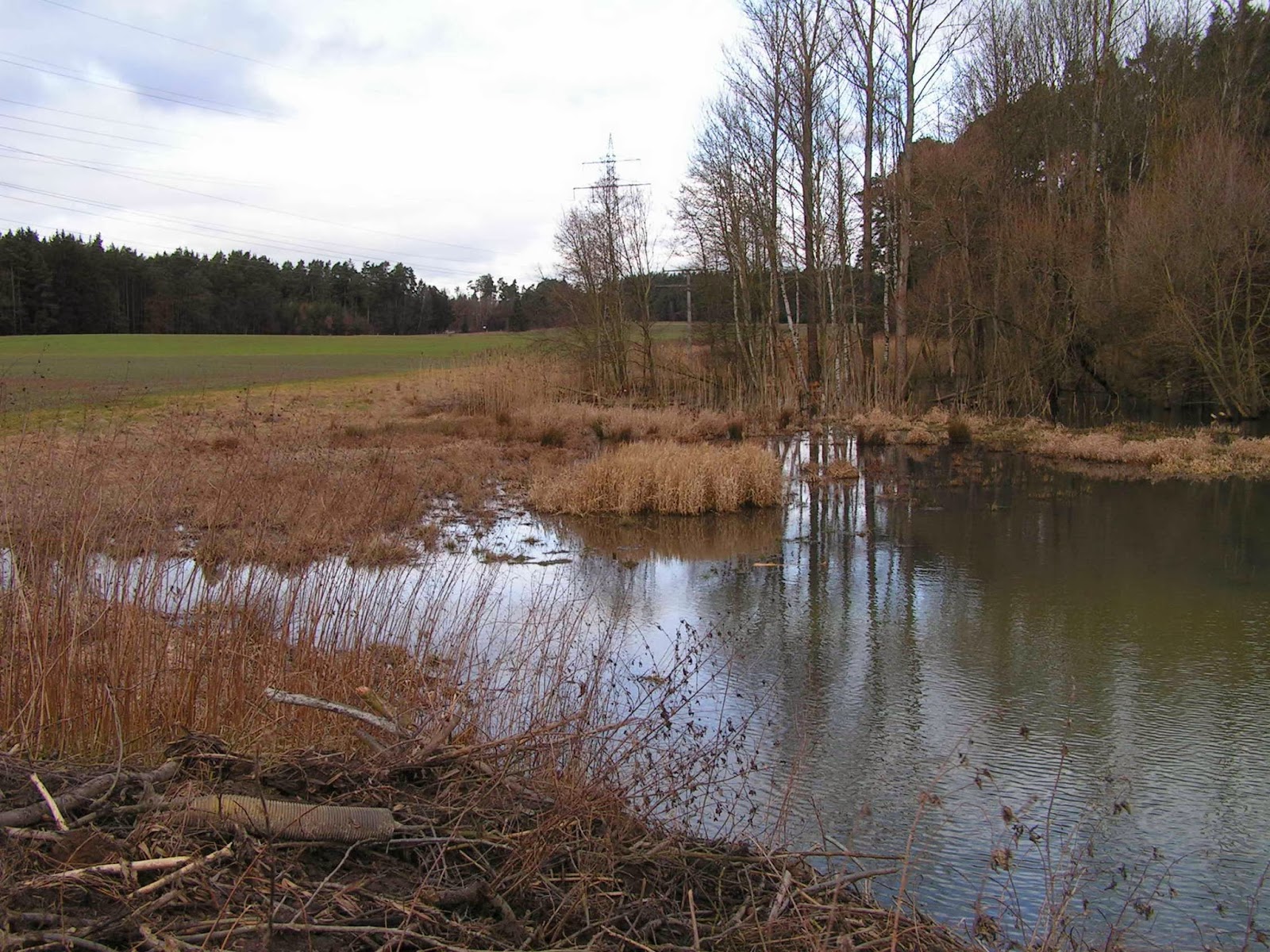
In the UK, we often attempt to mimic these natural processes at great cost. In Northumberland, millions of pounds were spent creating “artificial beaver dams” and ponds to slow water flow and protect villages like Belford. While these structures work, one must ask: why pay millions for artificial structures when beavers can do the work for free?.
Reintroducing beavers restores wetlands that hydrate the land and stop neighbouring farms from flooding. Furthermore, beaver wetlands are immense carbon stores. While a standard plantation woodland might hold 85 tonnes of carbon per hectare, a healthy peatland or wet woodland ecosystem—of the kind beavers create—can hold thousands of tonnes. If beavers were restored to riverbanks across the UK, the carbon sequestration could theoretically offset the country’s entire human carbon output.
The Case for Predators
Rewilding is not just about herbivores; it requires a complete ecosystem. In many parts of Britain, deer populations are out of control, preventing the regeneration of forests by eating young saplings. This is where the Lynx comes in.
The Lynx is not a threat to humans, but it acts as a crucial controller of deer, moving them around the landscape and reducing their numbers to sustainable levels. Reintroducing the Lynx to places like Scotland would allow forests to recover naturally, further aiding flood prevention and biodiversity.
The Economic Root of the Problem
Ultimately, the barrier to solving these issues is economic. We currently tax labour and trade—creates poverty and suppresses jobs—while subsidising land ownership and resource consumption. This encourages the inefficient use of land and the destruction of nature for profit.
The proposed solution is a shift in taxation: stop taxing incomes and instead tax the value of land and natural resources. This “Land Value Tax” would make it expensive to hoard land for inefficient, destructive purposes. It would naturally push marginal, unproductive farmland—which currently relies on subsidies—out of production and back into nature.
By aligning our economic incentives with ecological reality, we can stop paying for our own destruction. We can release marginal lands for rewilding, creating a country that is safer from floods, richer in wildlife, and economically fairer for its citizens.


Comments
Post a Comment