From Grey Owl to Green Economics: A Vision for Rewilding Britain
Conservationist Peter Smith wove together a remarkable narrative connecting the legacy of Hastings-born imposter Grey Owl, the lifelong obsessions of Richard Attenborough, and the radical economic philosophy of Thomas Paine. At the heart of this convergence is a solution to Britain’s ecological crisis: the reintroduction of the beaver and the implementation of a Land Value Tax.
The Legacy of Grey Owl
The story begins with Archie Belaney, a young man from Hastings who, despite a lack of academic focus, possessed a deep, instinctive connection to nature. He spent his youth wandering the local woodlands of Fairlight Glen and potentially Mallydams, famously carrying grass snakes in his pockets. Dreaming of the Canadian wilderness, Belaney emigrated, fought in the First World War, and eventually reinvented himself as “Grey Owl,” adopting a Native American persona.
Living on the margins of society as a trapper, Grey Owl underwent a profound transformation. Upon discovering two orphaned beaver kits, which he named McGinty and Rawhide, he abandoned trapping to become their protector. He realised what modern science is only now fully quantifying: beavers are the engineers of the forest.
Grey Owl understood that beavers create the “Great North” landscape. Their dams hold back winter meltwater, releasing it slowly during summer droughts, creating vast irrigation systems and habitats for moose, muskrat, and waterfowl. His lectures on this “interconnectedness of nature” became an international phenomenon, attended by hundreds of thousands, including two young brothers: David and Richard Attenborough.
The Attenborough Connection
While Sir David Attenborough’s career in natural history is legendary, it was his brother Richard (”Dicky”) who was most deeply moved by Grey Owl’s message. Richard’s life was quietly permeated by the symbol of the beaver. He named his London home “Beaver Lodge,” his production company “Beaver Films,” and even purchased the “Beaver House” on the Isle of Bute—historically significant as the site where the Marquess of Bute attempted to reintroduce beavers in the 1870s.
Richard Attenborough eventually directed the biopic Grey Owl, but his final, unrealised dream was to make a film about another Sussex resident: the revolutionary thinker Thomas Paine.
The Economics of Destruction
It is here that the narrative shifts from ecology to economics. Richard Attenborough understood that the destruction of nature is driven by economic incentives. On his deathbed, he expressed regret at never telling the story of Paine, whose work Agrarian Justice argued that the earth is common property.
Paine—and later economists like Henry George and Winston Churchill—advocated for a Land Value Tax. The argument is simple: we currently tax labour and trade, which creates poverty and suppresses jobs. Conversely, we subsidise land ownership, allowing landowners to extract wealth (economic rent) without working.
This system incentivises the destruction of nature. Landowners are paid subsidies to drain uplands and farm marginal land that should be wild. This “sheep-wrecking” of the landscape compacts the soil and strips away vegetation, causing rainwater to flash off the hills rather than being absorbed.
In places like the Marsham Valley and Pett Level, this mismanagement leads to catastrophic flooding. Water rushes down from drained agricultural fields, overwhelming flood defences. The traditional response—pouring concrete and dredging rivers—is a losing battle against physics.
The Ecological Solution: Nature’s Engineers
The ecological remedy mirrors the economic one. Just as a Land Value Tax would make it uneconomical to hoard and degrade marginal land, reintroducing beavers offers a cost-effective solution to flooding.
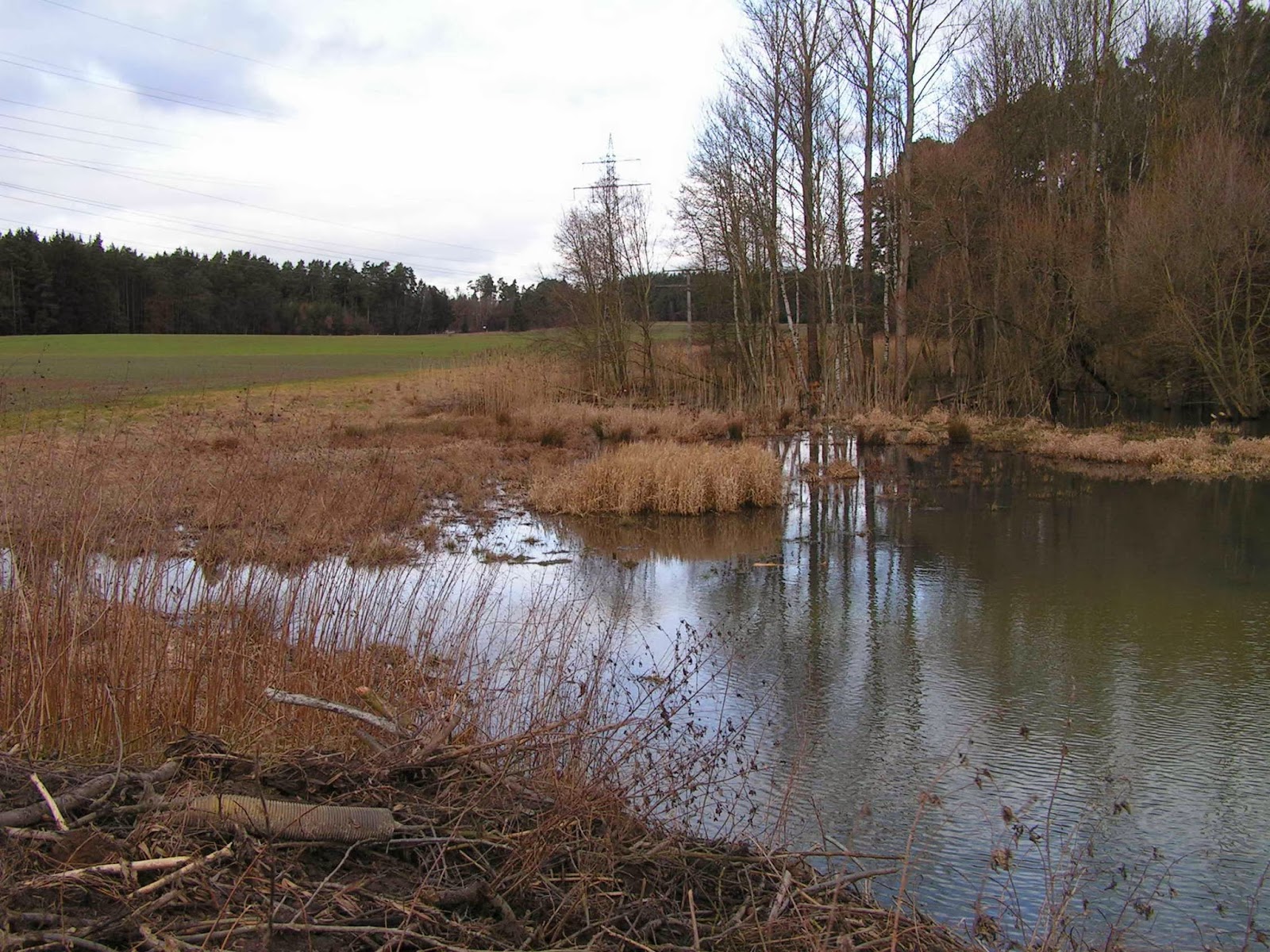
Beavers act as natural flood managers. Their dams slow the flow of water, reducing peak levels during storms and maintaining flows during droughts. They create “leaky dams” and complex wetlands that act as giant sponges. Furthermore, the wet woodlands and peatlands beavers create are massive carbon sinks, capable of sequestering far more carbon than plantation forests.
Despite their benefits, beavers remain controversial among some farming and fishing lobbies. However, evidence suggests that beaver wetlands actually increase fish sizes by providing better habitat for fry. Currently, there are an estimated 5,000 beavers in Britain, mostly in Scotland, with around 500 in the unofficial populations of the River Stour in Kent.
A New Project for Marsham Valley
Putting these principles into practice, a new project funded by a nearly £400,000 grant from the Environment Agency is set to begin in the Marsham Valley. The project aims to use natural flood management techniques—such as leaky dams and heathland restoration—to protect Pett Level from flooding.
Conclusion: A Tax for the Wild
The convergence of Grey Owl’s ecological wisdom and Thomas Paine’s economic justice offers a blueprint for the future. By shifting taxes from human labour to land values and pollution (externalities), society could make nature destruction prohibitively expensive. This would naturally push marginal farmland back into the wild, allowing space for beavers to return and restore the hydrological systems of the British Isles.
As Peter Smith argued, we must stop taxing people into poverty to pay for the destruction of our own environment. Instead, by adopting a system that values the commonwealth of the land, we can secure a future that is both economically prosperous and ecologically rich.


Comments
Post a Comment