The Enshittification of Everything Has a Cure... Tax the Shit Out of Shit!
Something has gone wrong with almost everything at once. Here is why, and what we can do about it.
There is a word for what is happening to us, and we have the writer Cory Doctorow to thank for coining it. Enshittification. The process by which platforms, products and services that once genuinely worked for us are slowly, methodically degraded, their value extracted from our pockets and our attention and redistributed upwards, until what remains is a hollow shell wearing the face of something we once found useful. The name is crude because the phenomenon is crude.
But Doctorow is missing something. His diagnosis is sharp; his prescription is not. This essay attempts to identify the root cause and, more importantly, the cure, because until we name the driving force correctly, we will keep producing clever analyses and achieving precisely nothing.
The genius of Doctorow's framing is that it describes a mechanism, not merely a feeling. Things are not just worse. They are being made worse, deliberately, as the predictable consequence of specific structural conditions. The deterioration is not entropy. It is policy. It is, in many cases, profit.
But the enshittification of our goods and services is only one face of a deeper rot. The same logic is consuming our natural world, our public institutions, and our own minds. And we will not fix any of it until we are honest about what is actually driving it.

The Wall of Shit
Let us take stock.
Cars are more expensive than they have ever been and less reliable than they were twenty years ago. The average new vehicle now contains over a hundred million lines of software code. Almost none of that code serves the driver. It locks owners out of repairs, harvests driving data for resale, and introduces subscription fees for features already physically present in the vehicle. BMW, for a time, charged a monthly fee to activate heated seats. The hardware was in the car. You had paid for it. You had simply not paid for the right to use it. Independent mechanics are meanwhile being frozen out by proprietary diagnostic systems, and dealership servicing costs have outpaced inflation for a decade running.
Our computers double in processing power every few years and feel slower with each passing iteration. This is not an accident. Software bloat, compulsory updates, and the steady conversion of tools into platforms are not engineering failures. They are the product of a deliberate business logic: do not sell someone a thing they own; sell them access to a thing you control. Microsoft Office, once a suite of applications you purchased and ran locally, is now a subscription service that nudges you constantly towards its cloud infrastructure and AI upsells. Adobe followed the same path. So did almost every professional creative tool. The product has not improved in proportion to the price. What has improved, methodically and without apology, is the lock-in.
Google Search in 2005 was a genuine miracle. Type almost anything and receive the most relevant document on the internet within a fraction of a second. Type almost anything into Google today and receive a page of advertisements, a carousel of sponsored results, an AI summary of contested accuracy, and a handful of SEO-engineered pages designed specifically to rank rather than to inform. The index has been gamed because Google's dominance made gaming it the rational commercial choice for everyone seeking attention online, and Google's advertising revenue model gave it every incentive to look the other way. The product is worse because its monopoly position removed the only pressure that ever makes products better: the genuine threat of competition.
Social media is perhaps the most psychologically brutal example. Facebook in 2007 showed you what your friends had posted. By 2017, it was showing you what would make you angry enough to respond. That shift was not capricious. It was the logical endpoint of engagement maximisation as a business model. Outrage travels further and faster than warmth. Division is more addictive than connection. The algorithm was redesigned, deliberately, to exploit the fault lines in human psychology. Instagram buried the chronological feed and flooded a platform people had used to share photographs with short videos optimised for compulsive consumption. X, formerly Twitter, has under its current ownership become something closer to a laboratory for manufacturing political grievance, where the owner himself is the most prolific experimenter.
The goods filling our homes and our landfills have become flimsier, harder to repair, engineered for replacement. The right to repair movement exists because manufacturers have deliberately removed repairability from their products, not because repair became technically impossible, but because a broken product that cannot be cheaply fixed is a product that must be bought again. Fast fashion operates on identical logic. The garments are not worse by accident.
The NHS is visibly disintegrating. Twenty-hour waits in Accident and Emergency for seriously ill patients. People in genuine pain lying on floors, passing out on waiting room seats, enduring humiliations that would have been unthinkable in the institution's better decades. Meanwhile an ever-growing proportion of NHS spending flows not to doctors or nurses or medicines but to service the legacy debts of Private Finance Initiative contracts, through which the state sold off its own buildings and now pays to rent them back at enormous long-term cost. We did not merely underfund public healthcare. We mortgaged it.
Council housing, once the bedrock of affordable shelter for working people, has been sold off and not replaced. The poorest and most vulnerable now rent privately, at costs that consume an ever larger share of household income and an ever larger share of the housing benefit bill. The landlord class extracts; the taxpayer funds the extraction; the tenant gets less for more.
In the United States the picture is, if anything, starker. Private equity firms have systematically acquired hospitals, care homes, GP practices and specialist clinics, applying the standard playbook: cut staff, reduce quality, raise prices, extract fees. The patient is not the customer. The patient is the feedstock.
It is the same with veterinary care in Britain. The large chains, many of them ultimately owned by private equity, have bought up independent practices across the country. Prices for routine treatments have risen sharply. Vet nurses have seen their wages squeezed. Less qualified staff are used where more qualified staff once were. The pets get worse care. The owners pay more. The difference goes to the fund.
This pattern repeats itself in supermarkets, petrol stations, letting agencies, funeral directors, care homes, legal services, accountancy, and hospitality. In each case, genuine competition has been replaced by a small number of dominant players who are no longer competing on quality and have every incentive not to. Capitalism, as it is actually practised in Britain in 2025, is not producing cheaper and better goods through competition. It is producing more expensive and worse goods through monopoly, and then extracting economic rent from people who have no practical alternative.
Our politicians are not innocent bystanders in this. They receive donations from the industries concerned. They accept directorships and advisory roles when they leave office. The revolving door spins constantly. The regulatory capture is not occasional or accidental. It is structural.
The Enshittification of Nature
Here is where the argument becomes more uncomfortable.
The same structural logic that has degraded our software, our healthcare and our high streets is now being applied to the natural world. Nature conservation in Britain is being subjected to the same pressures that hollowed out every other sector, and producing the same results: rising costs, worsening outcomes, and a growing industry of professional communication that substitutes for actual ecological function.
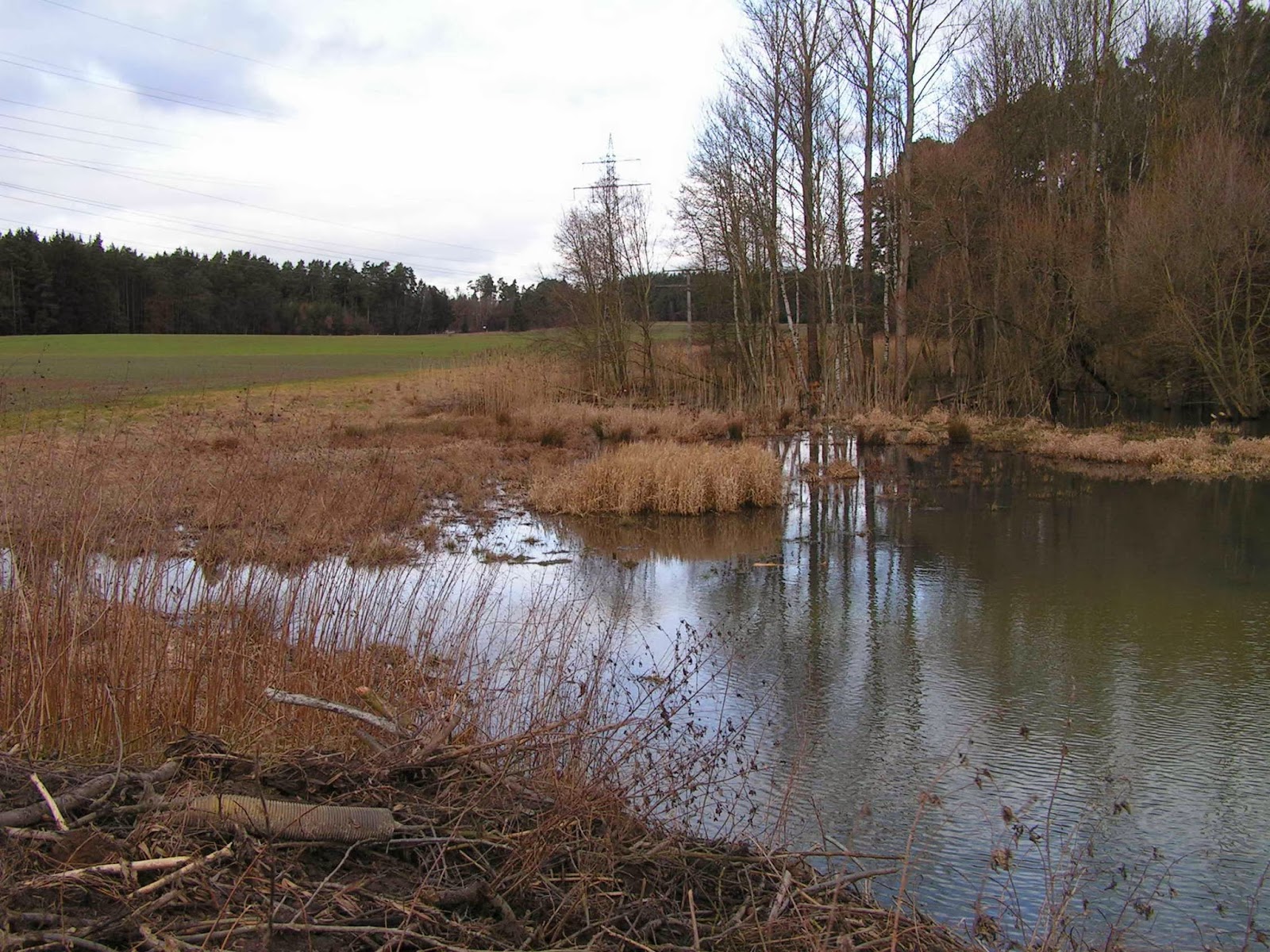
The rewilding movement has achieved genuine things worth celebrating. Beavers have returned to English rivers for the first time in centuries. Their effects on water retention, flood mitigation and local biodiversity have been measurable and real. White-tailed eagles are re-establishing themselves across southern England. These are genuine wins and ought to be acknowledged as such.
But the conditions in which those wins are being scored deserve serious scrutiny. The rivers into which beavers are being reintroduced carry agricultural runoff laden with nitrates, phosphates and pesticides at concentrations that would have been considered a scandal in an earlier era. Sewage discharge into English waterways increased dramatically across the privatisation years, with water companies paying out billions in shareholder dividends while deliberately under-investing in the infrastructure needed to stop human waste entering our rivers and seas. Thames Water, Southern Water and others were not the victims of unfortunate circumstances. They made choices. The celebrated beaver, swimming through water thick with effluent from a treatment works its private owners chose not to upgrade, is being asked to perform ecosystem restoration in conditions that make genuine restoration essentially impossible. We are rewilding the symptom. We are ignoring the cause.
The financialisation of conservation has accelerated sharply with the expansion of biodiversity net gain requirements, carbon offsetting markets and the broader machinery of natural capital accounting. In theory, these mechanisms make ecological value legible to financial markets and thereby attract serious investment. In practice, they have created an entirely new class of intermediary: the conservation consultant, the biodiversity broker, the carbon credit auditor, each of whom absorbs a substantial share of the money nominally destined for nature. The metrics used to measure biodiversity gain are contested, difficult to audit and, in some cases, straightforwardly manipulated. Land prices in areas designated as suitable for biodiversity offsetting have risen sharply, making it progressively harder for conservation charities with genuine ecological expertise to acquire the sites they need. The privatisation of conservation finance has done to nature precisely what the privatisation of water did to rivers: created a mechanism through which money flows towards the owners of the mechanism rather than towards the thing the mechanism was meant to serve.
There is a deeper irony here. The same political economy that produced the water company paying dividends whilst pumping sewage into chalk streams is now being invited to save those chalk streams through tradeable credits. The arsonist is being handed the fire hose. The price of the water in the hose will be agreed between the arsonist and a consultant.
The Common Thread
What connects degraded software to failing water companies, algorithmically poisoned social media to hollowed-out nature conservation, to PFI debt and rising rents and flimsier washing machines and vet bills that now require a mortgage to meet?
The answer is monopoly, in its various forms, and the structural conditions that allow it to persist and to grow.
A monopoly, or near-monopoly, is a position of market power so complete that the holder no longer needs to compete on quality. Once that position is established, the rational commercial strategy changes entirely. You do not invest in making your product better. You invest in making it harder for the customer to leave. The capital that once went into research and development, into genuine innovation, into improving the product itself, goes instead into lock-in: proprietary formats, exclusive contracts, artificially high switching costs, lobbying for regulatory barriers, and the acquisition of potential competitors before they become an actual threat.
This is not a moral failing of individual executives, though some of them are genuinely unpleasant. It is the entirely predictable output of a system in which monopoly is permitted to form and to grow without serious challenge.
Land is the original monopoly. Its supply cannot be increased. Its ownership is radically concentrated. A landowner contributes nothing to the value of their land by holding it; that value is created by the community around them, by public infrastructure, by the labour of workers, by the accumulated weight of civilisation. Yet the landowner captures it in full. Henry George identified this mechanism in 1879. Generations of economists have broadly confirmed his analysis. Successive governments have broadly ignored it. UK land prices have risen faster than wages for the better part of fifty years. An ever greater proportion of household income flows to landlords and mortgage lenders, not as a reward for productive activity, but as the price of permission to occupy space.
Network monopolies are newer but have grown with frightening speed. Amazon controls roughly thirty per cent of all UK online retail. It also operates the cloud infrastructure upon which a significant share of its own competitors depend, and runs an advertising business that has fundamentally reshaped how goods are discovered online. Google and Meta together absorb the majority of digital advertising revenue. These are not merely large companies. They are infrastructure, in the sense that operating a business without them is, for most purposes, not practically possible. And private, unregulated infrastructure behaves, in the end, as all monopolies do. It extracts.
The Monopoly of the Mind
There is one further monopoly that deserves its own section, because it is the newest, the least understood, and perhaps the most insidious of all.
The platforms that have colonised our attention have done so by building what amounts to a monopoly over a genuinely scarce and non-renewable resource: human time. We have approximately sixteen waking hours each day. The competition for those hours, waged by streaming services, social platforms, news organisations, gaming companies and now AI assistants, has become extraordinarily sophisticated and extraordinarily well-resourced.
The behavioural data harvested from our interactions is used to construct psychological models precise enough to predict, and then to shape, our choices. Every tap, every pause, every scroll, every moment of hesitation before you close an app and then reopen it thirty seconds later, is recorded, analysed and fed back into a system designed to keep you engaged for longer.
This is not a neutral service being provided to you. The data that describes your attention, your fears, your desires, your insecurities, your political anxieties, is being deployed against your interests, on behalf of whoever has purchased the advertising slot. When Facebook discovered that posts triggering anger and anxiety spread further than posts triggering warmth and connection, it did not pause to consider the public health implications. It updated the algorithm. When research emerged suggesting that Instagram use was linked to depression and body image problems in teenage girls, the company's internal response, later leaked, was to assess how much this threatened growth metrics. It did not substantially change its approach.
The social media monopoly is also a political monopoly, in ways we have barely begun to reckon with. When a single platform controls the primary information environment of several hundred million people, and when the owner of that platform has explicit political preferences and the technical ability to adjust what those people see, we have moved a long way from anything that can reasonably be called a free market of ideas. The concentration of communicative power in the hands of a small number of technology companies, most of them American, most of them ultimately answerable to their own shareholders and to no one else, is a democratic problem of the first order. It receives a fraction of the political attention it deserves.
You are not the customer of these platforms. You are the resource being mined.
The Solution: Simpler Than You Fear
Doctorow and others who have written about enshittification are excellent diagnosticians. They are considerably less forthcoming about cures. Antitrust enforcement is necessary but perpetually outpaced by the speed at which new monopolies form. Regulation is necessary but tends, over time, to be captured by the industries it was meant to constrain. Breaking up large companies is satisfying in principle but typically produces four medium-sized companies following exactly the same logic within a decade.
The more durable solution is fiscal rather than regulatory. Tax monopoly, not work.
The principle is straightforward, even where the implementation is not. A tax on the unearned increment, on the value that accrues to an asset not because of what its owner has done but because of the social and economic conditions surrounding it, removes the financial incentive to sit on that position rather than use it productively. It does not require civil servants to identify and punish bad behaviour after the fact. It simply makes holding idle monopoly power expensive.
Land value taxation is the clearest example. A tax on the rental value of land, assessed separately from the buildings or productive activity on top of it, would make it costly to hold valuable land without putting it to use, would reduce the share of household income absorbed by rent and mortgage payments, and would fund public services without penalising work or enterprise. It has been implemented in various forms in Denmark, Estonia, Singapore and parts of Australia, and the evidence for its effectiveness is substantial and largely uncontested among economists who have studied it seriously.
The same logic extends further. Intellectual property generates substantial monopoly rents, particularly in pharmaceuticals, where medicines developed largely with public research funding can be priced at thousands of pounds per patient because their manufacturer holds the patent. A progressive levy on intellectual property value, light in the early years when the incentive to invest matters most, and rising as the monopoly matures and the original investment has long been recovered, would return a portion of that rent to the public whilst preserving the initial incentive to innovate. As the patents get expensive, a new revolution in entrepreneurs can now unleash new knowledge and advance humanity, unlike our current system, where intellectual monopolies are a club to beat down competition
Network monopolies derive their value from network effects: each additional user makes the platform more valuable, and that value is captured by the platform owner rather than shared with the users who created it. A tax on the value of those network effects would generate revenue and simultaneously reduce the financial reward for building extractive platforms designed to trap users rather than serve them.
The data economy requires its own reckoning. A meaningful tax on the commercial value of personal data, assessed against the companies collecting it, would raise revenue that could be redistributed to the public whose attention and psychology was mined, and would create a direct financial incentive to collect less data and to use it in ways that genuinely serve rather than manipulate. At present, the extraction of your psychological profile is costless to the extractor. That is not a law of nature. It is a policy choice.
Alongside monopoly taxation, negative externalities must finally be priced honestly. Pollution, carbon emissions, the degradation of water quality, the destruction of habitat: these are real costs currently imposed on the public and on the natural world at zero charge to those imposing them. A genuine externality tax, set at the actual cost of the damage caused rather than at whatever level avoids industry complaint, would make the production of the wall of shit considerably more expensive, and make the alternatives considerably more attractive.
The Free Market We Were Promised
There is a final irony worth naming plainly.
Those who argue against enshittification, across the political spectrum, are routinely accused of being anti-market. The accusation is precisely backwards. What we have now is not a free market. It is a monopoly market, in which the gains from genuine productivity and innovation are systematically captured by those who control scarce resources, whether land, data, networks or attention, rather than by those who create genuine value.
A genuine free market, one in which monopoly rents are taxed away and environmental costs are honestly priced, would reward companies that make better products and punish companies that make worse ones. It would make reliable, repairable, long-lasting cars commercially superior to disposable data-harvesting appliances. It would make social platforms that efficiently connect people to things they actually care about more viable than platforms that exploit psychological vulnerability to sell advertising. It would make productive use of land more attractive than holding it idle while waiting for a planning windfall. It would make dumping sewage into rivers expensive rather than profitable.
It would, in short, produce a world in which things improved rather than deteriorated, in which engineers and makers and genuine innovators could capture the value of their work, and in which those who hold monopolies over nature, space, ideas and minds were asked to pay properly for the privilege.
The wall of shit is not an inevitability. It is not the market. It is not human nature. It is a set of policy choices, made by people with names, in favour of interests with addresses. We can make different choices. We simply need to stop pretending we cannot.
The wall of shit is not inevitable. It is not the invisible hand of the market, nor some bleak feature of human nature we must simply endure. It is a constructed thing, built brick by brick through deliberate choices, made by people with names, in boardrooms with addresses, ratified by politicians who knew exactly what they were doing and who they were doing it for. We built it. We can tear it down.
The mechanism is not complicated. Stop taxing work. Stop taxing enterprise. Stop taxing the people who make things, grow things, build things and care for things. Tax the people who own things without contributing anything, the landlords collecting rent on land they did nothing to make valuable, the monopolists charging tolls on infrastructure society built around them, the platforms strip-mining human attention and selling it back to us as manipulation.
Tax the extraction. Free the creation.
Tax the Shit out of Shit
Do that, and watch what happens. Housing becomes affordable, not as a political promise but as a mathematical consequence, because land hoarding becomes expensive and building becomes cheap. Public services are funded not by squeezing workers but by reclaiming the value that communities themselves generate. Products improve because companies must compete on quality rather than entrench themselves through lock-in. Nature recovers because destroying it carries a genuine cost. The monopolists either pay their share or find, for the first time in a long while, that the game is no longer rigged in their favour.
This is not a utopia. It is not a revolution. It is a correction, the restoration of a system in which value flows to those who create it rather than to those who have simply learned to stand between the rest of us and the things we need.
We are not powerless. We are not without options. We have simply been governed, for decades, by people who benefited from us believing that we were.
That can change. It should change. And if enough of us understand why the wall exists and who built it, it will.


Comments
Post a Comment